


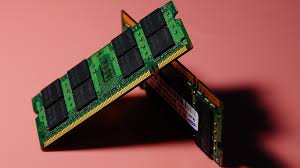
Google just fired a software shot at the AI hardware boom, and memory-chip bulls probably heard the glass crack.
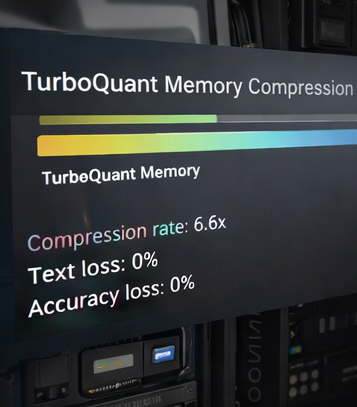
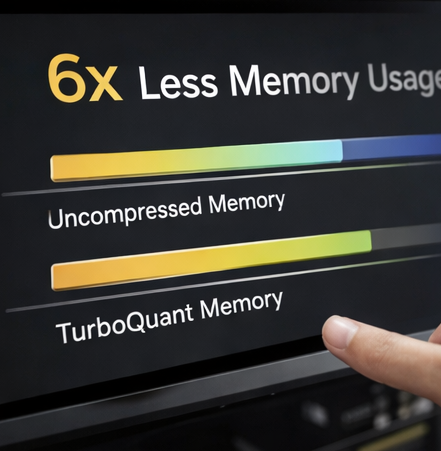
Google says its new TurboQuant compression method can slash AI memory usage by at least 6x while preserving model quality. The company says the same technique can deliver up to 8x faster attention performance on Nvidia H100 systems. That is not small news. It strikes at one of the costliest pain points in modern AI: memory pressure.
Large language models do not only hunger for compute. They devour memory. As context windows stretch longer, the KV cache grows quickly and consumes expensive high-bandwidth memory. That strain has helped fuel booming demand for AI memory chips and bigger, pricier server builds. Google says smart compression can relieve a big chunk of that pressure without wrecking output quality. If the claim holds in use, the AI infrastructure story just got more interesting and a bit messier.
WhatWhat’spening & Why This Matters
Targeting the KV Cache Bottleneck

TurboQuant aims to address a specific headache in AI inference: the key-value cache. That cache stores tokens from earlier parts of a conversation or prompt so the model can keep context without recomputing everything each time. The longer the context, the larger the cache. Soon enough, memory starts choking performance harder than raw compute.
Google says TurboQuant cuts that cache burden by at least 6x. It does so without retraining the model. That detail is huge. Engineers do not need to rebuild a model from scratch to get the benefit. They can apply the method during inference and squeeze more useful work out of the same memory footprint.
That changes the economics fast. AI operators spend heavily on memory-rich hardware because long-context inference is resource-intensive. If software can compress the cache sharply, the cost of serving large models starts to ease. That does not kill demand for memory chips. It does dent the old assumption that hardware demand can only go up.
Big Speed and Memory Claims
A 6x memory reduction grabs headlines. The speed claim may carry equal weight. Google says TurboQuant can deliver up to 8x faster attention throughput on Nvidia H100 GPUs. In practical terms, that can mean faster response times, better system utilisation, and lower serving costs.
AI buyers care about speed because users hate delay and finance teams hate idle hardware. Every boost in inference efficiency helps a model serve more requests with less strain. That is how an algorithm turns from an academic curiosity into a boardroom talking point.
The clever part here is that Google is not only trimming memory. It is attacking the traffic jam between memory and compute. That is where much of the slowdown lives. Long-context AI systems often do not fail because the model is too dumb. They stall because the memory movement is too expensive.
So yes, TurboQuant sounds technical. The business effect is easy to understand. Less memory. More speed. Lower cost. Better scale. That recipe gets executiveGoogle’son very fast.
Google’s Timing
TurboQuant arrives during a period when AI memory has become one of the hottest stories in computing. Rising demand for high-bandwidth memory has helped lift prices and strengthen the narrative that AI growth depends on endlessly larger hardware orders. That idea has helped memory makers, server vendors, and infrastructure bulls argue that the runway stillGoogle’ses far ahead.
Google’s announcement complicates that clean story. If one software advance can cut a major AI memory burden by 6x, the market has to ask a rude question: how much of the hardware frenzy was based on an inefficiency that software could eventually reduce?
That is why the market reaction was so sharp. Memory and storage names took a hit after the announcement. Investors did not wait for long philosophical essays. The” saw a threat to the “more”RAM solves everything” narrative and sold first.
The bigger truth is less dramatic. AI will still need large memory systems. TurboQuant targets inference cache usage, not every byte in the AI stack. Yet software efficiency gains can reset expectations. Wall Street hates that kind of surprise almost as much as engineers love it.
A Brutal Technical Pitch Is Brutal… in the Best Way
Google describes TurboQuant as a training-free compression algorithm. Training-free means companies do not need to spend extra time and money retraining models just to enjoy the gain. The method works with existing models such as Gemma and Mistral.
That lowers the barrier to adoption. Engineers love anything that cuts pain without adding a new months-long integration headache. If a memory-saving method requires a giant model rewrite, many firms will delay. If it slides into inference with fewer scars, adoption gets far easier.
Google’s research says TurboQuant compresses the KV cache down to around 3 bits in some cases while avoiding measurable quality loss on key tests. That sounds like magic to non-specialists. It is really clever math doing heavy lifting, where brute-force hardware was used to get the cheque.
The phrase that will stick is”“without sacrificing quality”” That is the whole game. Compression is easy if you are willing to accept garbage. Compression is valuable when the model still performs as expected. That is why people are paying attention.
AI: The Software vs. Hardware Fight
For two years, much of the AI boom has felt like a hardware arms race. Bigger GPUs. Bigger clusters. Bigger memory orders. Bigger capex. TurboQuant suggests a more awkward future for that narrative. Software will keep attacking the inefficiencies that made giant hardware budgets seem inevitable.
That does not mean hardware stops winning. AI still needs compute, bandwidth, networking, storage, and power. But software advances can flatten parts of the demand curve. They can delay upgrades, improve utilisation, and reduce the urgency to buy the fattest hardware on the shelf.
That is why TurboQuant is with real force. It reminds the market that algorithms can change the economics of infrastructure faster than many forecasts admit. One smart compression technique can erase a chunk of demand growth that chipmakers were counting on.
The spicy version is even simpler: software just walked into the memory market and kicked over a chair.
Winning Longer Context at Lower Costs
Users love AI systems that remember more. They want longer documents, deeper conversations, larger codebases, and context windows. Providers want those features too because richer context makes assistants more useful and stickier.
The trouble is cost. Long context inflates KV caches, and KV caches bloat memory needs. That has made long-context AI one of the more expensive product promises in the market.
TurboQuant offers a route around that pressure. If the cache compresses sharply while keeping quality intact, a longer context is cheaper to serve. That can help providers roll out larger context windows without watching margins melt.
That is where the bigger product story lives. Better compression not only saves infrastructure money. It unlocks more practical AI experiences. More persistent assistants. Larger documents. Longer meetings. Larger code repositories. Smarter memory across extended sessions.
In short, Google is not merely saving RAM. It is trying to make bigger-context AI less financially stupid.
The Cost of Memory Is Rising
It is tempting to overreact and claim TurboQuant just destroyed the memory-chip thesis. That is too neat. AI systems still require large memory pools for model weights, training, storage, and serving infrastructure. TurboQuant targets a key slice of the problem, not the whole buffet.
The smarter read is narrower and more useful. TurboQuant threatens the lazy version of the AI memory story. It says memory demand is not purely a hardware function. It is shaped by software efficiency, too. That means future forecasts need more humility.
There is a decent chance a classic rebound effect kicks in. If memory compression makes inference cheaper, companies may run larger models, longer contexts, and more AI workloads. Savings in one layer often create appetite in another. The AI industry has not exactly built its culture around restraint.
So the memory market is not dead. But the clean, upward-only pitch just took a punch in the throat.
A Feather iGoogle’s’s Cap
TurboQuant gives Google more than applause from researchers. It strengthenGoogle’s’s AI story in a way that investors and enterprise buyers care about. Google can argue that it is not only building capable models. It is building cheaper and more efficient ways to run them.
Margins, scale, and energy use are under growing pressure. AI companies love to talk about intelligence. Customers increasingly care about economics. A model that performs well but costs too much to serve is a luxury item. Google wants Gemini and its AI stack to look more practical than that.
There is branding power here, too. If Google is associated with meaningful efficiency breakthroughs, it sounds less like a company chasing the AI race and more like one shaping the infrastructure beneath it.
That is a stronger position. It says, “We are not only using the road. We are redesigning the roa”.”
The Impact on Next-Gen AI
TurboQuant points toward a trut” about the next AI phase. Raw scaling will not vanish. Yet efficiency will become a bigger competitive weapon. The winners will not only train larger models. They will serve them more cheaply, more quickly, and with less waste.

That shift helps more than hyperscalers. It can open the door to wider use across smaller clouds, research labs, enterprises, and even local deployments. Lower memory pressure can make more AI workloads feasible on narrower infrastructure budgets.
It can help reduce energy use too. Less memory movement and better throughput can improve the overall efficiency of AI systems, which is a polite way of saying fewer resources are burned for the same output.
So the wider effect of TurboQuant may not be a crash in hardware spending. It may be a deeper AI market, where efficiency gains widen access, sharpen competition, and punish lazy assumptions about infrastructure.
TF Summary: What’s Next
Google’s TurboQuant compression method attWhat’s serioGoogle’sttleneck. The company says it cuts KV cache memory usage by at least 6x and can speed up attention performance by up to 8x on Nvidia H100 GPUs, all without retraining models or sacrificing output quality. That makes it one of the more important AI infrastructure stories of the year because it targets cost, speed, and scale simultaneously.
MY FORECAST: TurboQuant will not kill the memory-chip market, but it will force a reset in how people talk about AI infrastructure. More software teams will chase similar efficiency gains. More investors will question simple hardware-demand stories. More AI providers will use memory savings to offer longer context and lower serving costs. The next AI arms race will not only reward bigger hardware. It will reward smarter compression, too.
— Text-to-Speech (TTS) provided by gspeech | TechFyle