


Google wants switching AI assistants to feel less like a breakup and more like a moving van with all your stuff already packed.
Google has added new tools that let people move AI memories and chat history from other assistants into Gemini. The idea is simple. Users no longer need to start from zero when they try a new chatbot. Instead, they can bring over key preferences, old conversations, and enough context to help Gemini pick up where another AI left off. Google says the features are rolling out to consumer Gemini accounts on desktop, covering both a memory import flow and a chat-history upload option.
That sounds practical, but it is more important than it first appears. AI assistants are turning into sticky products because they remember what people like, how they work, and what they have already asked. Once a chatbot knows your habits, leaving it is annoying. Google is trying to remove that friction. In plain English, Gemini is not only trying to be useful. It is trying to make switching costs much smaller for users and much more painful for rivals.
What’s Happening & Why This Matters
Google Is Turning AI Switching Into a Feature
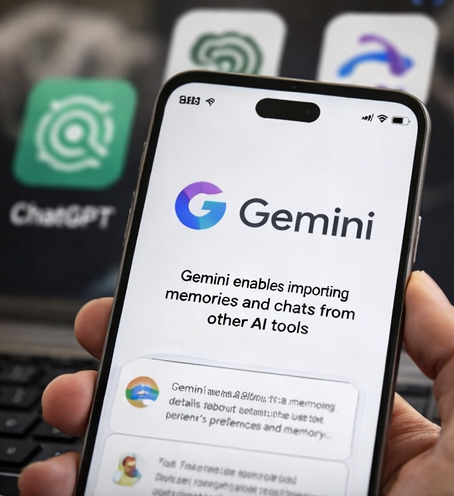
Google announced on 26 March that people can import memories, preferences, and chat history from other AI apps directly into Gemini. The company says the goal is to help users “pick up right where you left off without starting over.” That line gets to the point. AI assistants are more personal, so migration matters more than it did when chatbots were little more than question boxes.
This is a sharp product move. In earlier phases of the chatbot race, companies fought over model quality, speed, and integrations. But memory changes the market. Once a system remembers your relationships, preferences, work patterns, and past chats, it is harder to leave. Google is responding by saying, “Fine, bring the memory with you.”
Instead of asking only which assistant is smartest, Google is asking which assistant is easiest to move into. That is a very consumer-friendly pitch on the surface. It is still ruthless competition underneath.
Gemini’s Memory Import Uses a Prompt-Based Shortcut
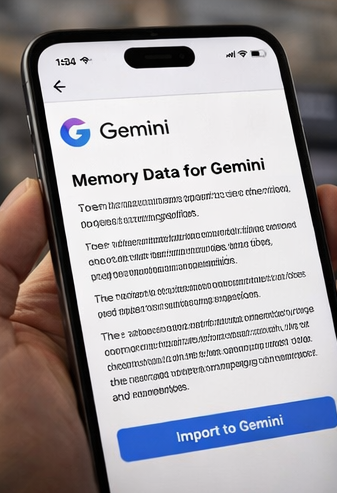
The first new tool is Import Memory. Google says users open Gemini settings, choose the import option, and get a suggested prompt. They paste that prompt into their current AI app. The other AI then generates a summary of the user’s preferences and personal context. After that, the user copies the summary back into Gemini, which analyses it and stores the details in the Gemini context. Google says this helps Gemini understand things such as interests, relationships, and background details without forcing users to reteach the assistant from scratch.
That setup is clever because it avoids direct system-to-system connectivity. Google is not saying it has built a seamless pipeline with rival chatbots. It is using the old-fashioned copy-and-paste trick, but in a guided way. That keeps the process simple while sidestepping a bigger interoperability fight.
The Verge reports that this tool works by asking users to paste a suggested prompt into the previous AI and then paste the resulting output into Gemini. That means Gemini relies on the other assistant to summarise what it “knows” about the user. The process is not magical. It is a smart transfer form.
Full Chat History Imports Make Gemini a Migration Destination
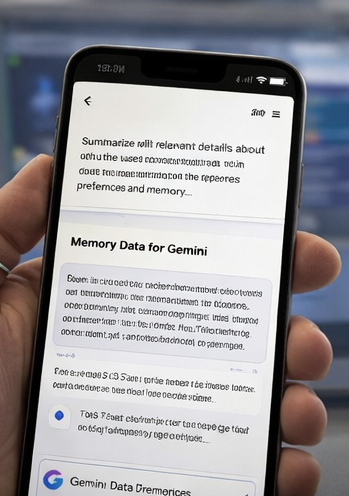
The second tool goes further. Import Chat History lets users request an export of their chats from another AI provider and upload the archive to Gemini as a .zip file up to 5GB. Google says this helps users continue past threads and keep context from prior discussions. The Verge adds that users can later delete specific imported chat histories from the chat menu or remove entire .zip imports in settings.
That is a much bigger move than a memory summary alone. A memory import gives Gemini a profile. A chat-history import gives Gemini a record. Those are not the same thing. Old chats can reveal tone, recurring tasks, unfinished ideas, and work patterns that a short preference summary might miss.
Conversation history is where AI assistants begin to feel personal and persistent. People often return to earlier chats for writing drafts, travel plans, coding help, shopping lists, or personal brainstorming. When that history is portable, the assistant starts looking more like software you can move between platforms rather than a walled garden you must live inside.
Google Is Quietly Admitting That AI Memory Is the New Lock-In Layer
One of the most revealing details is rollout’s language. Google is renaming “past chats” inside Gemini to “memory.” The Verge says that change ships alongside the new import tools. This is not only a naming tweak. It reflects how Google wants users to think about the product. Gemini is not merely storing old prompts. It is remembering you.
“Memory” is stickier than “history.” Chat history sounds archived. Memory sounds active. It suggests the assistant can use prior context in a living way. That is exactly how AI firms want people to relate to their products.
The competitive implication is obvious. If memory is the real switching cost in AI, then making memory portable is both a concession and an attack. It concedes that users hate rebuilding context. It attacks rivals by reducing one of the best reasons to stay.
Google Is Entering an AI Portability Race, Not Starting One
The Verge notes that Google’s move comes after Anthropic updated its own tool for copying another AI’s memory into Claude earlier this month. This is not a random Google feature. It is part of a wider shift where AI companies are starting to compete on portability as well as model performance.
That makes sense. The AI market is maturing. Early adopters no longer try one chatbot once. They are building habits, storing conversations, and shaping workflows around the tools. Once that happens, portability is a product category. Users want to test alternatives without losing what they have already built.
The strategic angle is delicious. AI companies spent two years racing to indispensability. Some of them are racing to help users leave someone else’s product more easily. That is competition with a smile and a knife behind the back.
These Features Are Consumer-Friendly, But They Still Carry Privacy Questions
Any time an AI company asks for more personal context or uploads of past chats, privacy questions show up fast. Google is pitching the features as user-driven and controlled. Users choose what to copy, paste, and upload. They can remove imported chat histories later. That is a better posture than silent syncing or forced connection.
Still, the concerns do not vanish. A memory summary may contain family details, preferences, work habits, or sensitive background information. A full chat-history archive may contain far more. Once imported, that data is part of Gemini’s operational context. Users, therefore, need to consider whether they truly want one assistant to inherit everything another assistant previously saw.
This is where convenience and caution collide. Importing context can save time and reduce frustration. It can also concentrate more personal information within a single AI ecosystem. Google’s tools make the move easier. They do not remove the need for judgment.
Not Everyone Gets the New Tools Right Away
Google says the features are rolling out to free and paid consumer Gemini accounts on desktop. The Verge says they are not currently available to business, enterprise, or under-18 accounts. Google is treating this as a consumer migration feature first, not a universal platform function.
That limitation may frustrate some users, especially students or workplace users who would benefit from moving long-running threads and preferences. At the same time, the restriction makes sense. Business and under-18 accounts carry extra privacy, compliance, and policy complications. Rolling out first to consumer desktop accounts gives Google a safer testing ground.
Features often launched in AI arrive in layers. What starts as a desktop consumer tool can later move to mobile, education, or enterprise settings once the company understands the rough edges.
More Personal Without a Painful Switch
Google says the most helpful assistant is one that is personal and understands a user’s preferences and past conversations. That is an important statement because it reveals the product philosophy. Gemini is no longer being pitched only as a smarter chatbot. It is being pitched as an assistant with continuity.
Continuity is powerful. It means fewer repeated prompts, fewer restated preferences, and fewer explanations of who you are or what you need. In daily use, this is a differentiator. Most people do not care which model wins a leaderboard if the losing model already knows their life better.
Import tools are strategic and essential. They reduce the pain of building continuity in a new place. If Google can make Gemini act informed from day one, it increases the chance that curious users stay curious long enough to become committed.
Pursuing Market Share via Standards
There is a larger implication here. If AI memories and chat histories are portable, users may begin to expect portability everywhere. Once that expectation forms, companies that do not support easy migration may look defensive or anti-user.
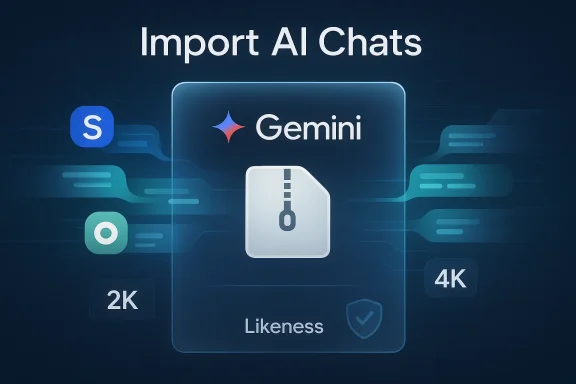
That could help create a de facto standard for AI switching. Even without formal interoperability agreements, prompt-based memory summaries and downloadable chat exports can act as common moving boxes for the chatbot era. That is still clunky compared with true one-click migration. It is much better than digital amnesia.
Google would probably accept credit for making the switch easier. The deeper significance is that AI assistants may slowly stop behaving in isolated silos and start behaving more like competing productivity platforms that must earn continued loyalty.
TF Summary: What’s Next
Google’s new Import Memory and Import Chat History tools make Gemini far easier to move into. Users can bring over summarised preferences, relationships, and context from other AI apps, or upload full exported chat archives as .zip files up to 5GB. Google is even renaming “past chats” to “memory,” which shows how central persistent context is in the AI assistant race.
MY FORECAST: More AI firms will copy this fast. Memory portability will become a standard feature, not a novelty. The real competition will then shift to who uses imported context best, who protects it most clearly, and who makes switching less painful. Chatbots are no longer only fighting to answer better. They are fighting to inherit your digital past.
— Text-to-Speech (TTS) provided by gspeech | TechFyle