


Brussels wants AI to protect your dinner and stop freeloading on your books.
The European Union has a talent for taking messy digital problems, dragging them into a committee room, and returning with a stack of rules thick enough to stun a horse. Sometimes that habit is painfully slow. Sometimes it is the only adult decision in the room.
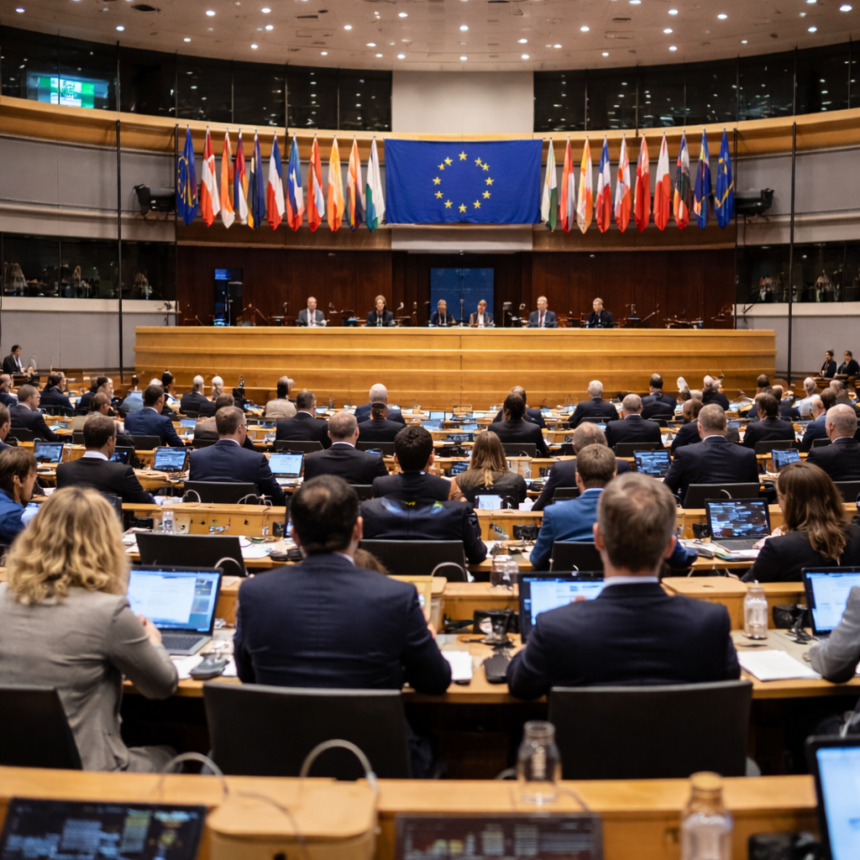
This week, Brussels is pulling AI policy in two directions at once. On one side, the European Parliament is advocating for tougher rules on AI companies’ use of creative works for model training. On the other, the European Commission is debuting a new AI platform called TraceMap to help detect food fraud, contaminated products, and outbreaks faster across the bloc.
That pairing is more revealing than it first appears. The EU is not treating AI as one single story. AI is a force that can either strip value from culture or strengthen public protection, depending on how it is governed. Europe is trying to build an AI framework that says “yes” to useful systems and “not so fast” to the ones built on borrowed work and fuzzy excuses.
What’s Happening & Why This Matters
Brussels Wants Creative Work Tracked, Named, and Paid For
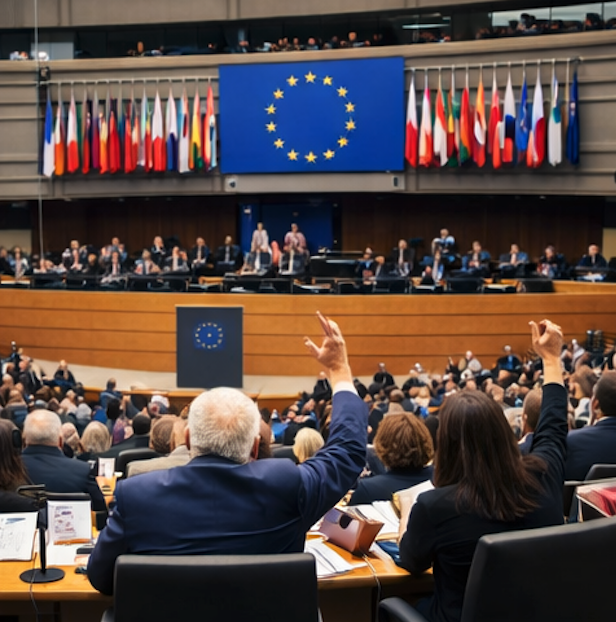
The European Parliament has adopted recommendations calling for a “permanent” solution to protect copyright from AI training. The report, drafted by Parliament’s legal affairs committee, says EU copyright law should apply to all AI systems made available to users inside the bloc.
That sounds obvious, but It is not obvious in practice.
For years, generative AI companies have treated web-scale content scraping like weather. The data was simply “out there,” and somehow the models absorbed it. Artists, publishers, musicians, and writers have been shouting for quite a while that this story is convenient nonsense. Their work did not magically appear in training sets. It got taken, copied, and processed.
Parliament’s answer: make the trail visible.
One proposal would create a European register at the EUIPO listing every copyrighted work used to train AI models, along with artists who have opted out. The report says companies should disclose which websites they scraped for training data. MEPs warn that failure to comply with the transparency requirements could amount to copyright infringement.
That is not a small policy tweak. That is Brussels saying, “Show your homework, then show where you copied it from.”
The Core Principle
MEP Axel Voss puts the issue in language even a half-awake platform executive should understand: “Generative AI must not operate outside of the rule of law. If copyrighted works are used to train AI systems, creators are entitled to transparency, legal certainty, and fair compensation.”
That quote matters because it pins the whole dispute to three pillars: transparency, certainty, and compensation. Transparency means creators and regulators can see what went into the model. Legal certainty means everyone knows the rules instead of wading through fog. Compensation means creators do not get told to clap politely while someone else monetises their catalogue.
The Parliament also notes that the EU’s creative sector generates almost 7 per cent of the bloc’s GDP, which makes the fight more than a niche artists’ quarrel. It is an economic question, a sovereignty question, and a labour question all rolled into one.
When policymakers talk about “innovation,” they often forget that Europe already has an innovation sector called culture. It writes, films, records, draws, composes, publishes, and exports. If AI policy weakens that base, Europe is not modernising. It is cannibalising.
Creators: The Current EU Rulebook Is Too Murky
Under current EU rules, companies can use copyrighted material for text and data mining, including AI training, unless a creator has “reserved their rights,” according to Marc du Moulin of the European Composer and Songwriter Alliance.
That system has one nasty flaw: it asks creators to play defence in a game where the other side already scraped the field.
Creative groups have long said that the current framework does not provide a clear, practical way for artists to opt out. That is why calls for registries, disclosures, and licensing systems are getting louder. If opt-out rights exist only in theory, then the right is mostly decorative.
And decorative rights do not pay the rent.
Reaction Splits Exactly How You’d Expect
Creative groups welcomed Parliament’s move. GESAC said the vote shows Parliament is taking a firm position in favour of creators’ rights. Its general manager, Adriana Moscoso del Prado, said innovation, fairness, and cultural sovereignty must go hand in hand. She backed the report’s support for a licensing market that ensures creators get paid when their works are used to train AI systems.
Meanwhile, Creativity Works! argued that the immediate priority should be enforcing existing rules rather than rewriting the law in ways that could weaken protections and chill investment in culture.
Then came the predictable pushback from tech industry voices. The Computer & Communications Industry Association warned that requiring prior authorisation from artists could amount to a “compliance tax” for European firms and drag on digital competitiveness. Boniface de Champris, the group’s AI policy lead, said the non-binding report sends the wrong signal to innovators.
There it is. The usual trench line.
Creators say: Show us what you used, then pay us. Tech groups say: That slows us down.
Both sides are arguing about competitiveness. One side means competitive AI firms. The other means are competitive creative industries. Brussels is trying to hold both in the same hand without dropping either. That is fiddly work, and fiddly work is the EU’s natural habitat.
At the Same Time, the EU Is Using AI to Chase Food Fraud Faster
While lawmakers wrestle with copyright and training data, the Commission is applying AI in a much more straightforwardly useful direction: food safety.
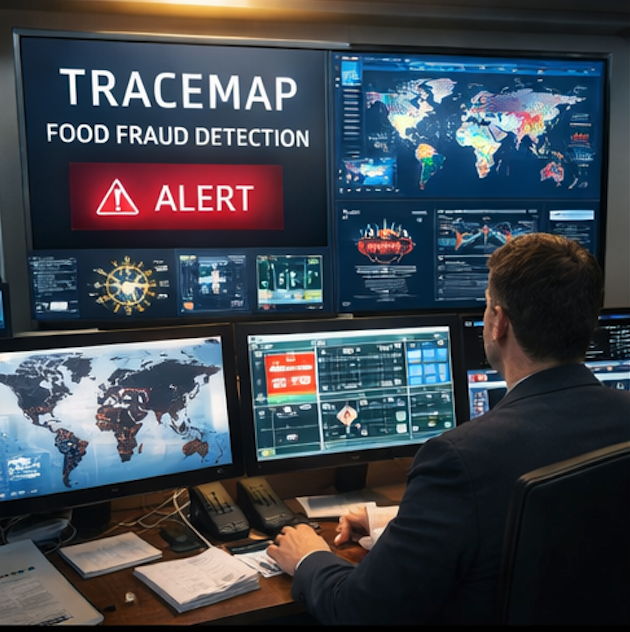
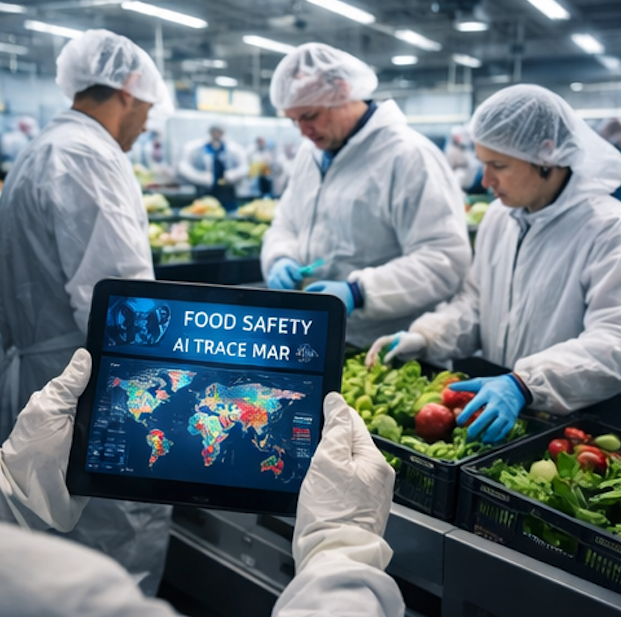
The European Commission has launched TraceMap, an AI platform designed to improve the detection of food fraud, contaminated food, and foodborne disease outbreaks across the EU. The tool is available to national authorities in all member states.
That rollout is not a theoretical policy, but an operational infrastructure.
According to the Commission, TraceMap uses existing agri-food data to track trade patterns and production flows in near real time. It aims to improve risk assessments, quickly identify links between operators and distribution channels, and monitor supply chains so unsafe products can be recalled faster.
That is the kind of AI story policymakers love because it does not ask the public to swallow vague promises about creativity or disruption. It says, quite simply: We can find bad food faster.
And frankly, that beats a thousand keynote slides about “transforming workflows.”
The Food Safety Numbers Explain the Urgency
Europe has real reasons to move quickly.
The Rapid Alert System for Food and Feed (RASFF) saw notifications rise 12 per cent in 2024 to 5,250. About one-third of those were border rejections, largely tied to pesticide residues in fruit and vegetable imports from Türkiye, Egypt, and India. The top notifying countries were Germany (1,907), the Netherlands (1,155), and Italy (965).
Separately, Europe recorded 6,558 foodborne outbreaks in 2024, up 14.5 per cent from the previous year, according to the latest EFSA data. The most commonly reported diseases were Campylobacteriosis, Salmonellosis, STEC infection, and Listeriosis. Among these, Listeria caused the highest proportion of hospitalisations and deaths. Roughly 7 in 10 infected people required hospital care, and about 1 in 12 died.
Those are not abstract compliance metrics. That is the difference between catching contamination fast and sending people to hospital.
This is why TraceMap matters. AI in food safety is not a shiny add-on. It is a speed tool for public health.
TraceMap’s Trial Run
The Commission says a pilot version of TraceMap was used during recent baby formula recalls in Europe linked to contaminated ingredients from China.
That detail is useful because it answers the obvious question: Is this another press-release robot, or has the system already seen real stress?
The answer appears to be that TraceMap has already touched a live recall scenario. That does not prove perfection. It does show the platform is not starting from zero.
Commissioner Olivér Várhelyi calls the tool a breakthrough that will “revolutionise” the EU’s ability to react to food safety crises and clamp down on food fraud. He says it should improve coordination between countries, protect both farmers and consumers, and strengthen confidence in the bloc’s food safety systems.
Politicians love the word “revolutionise.” Usually, I roll my eyes and keep walking. But here the logic is at least grounded. Cross-border food supply chains are messy, fast, and data-heavy. That is exactly the sort of environment where pattern-matching systems can be genuinely useful.
The Bigger Pattern: The EU Wants “Good AI” and “Accountable AI”
Put the two files together, and the shape of the EU’s AI politics is clearer. On culture, Brussels wants accountability. On food safety, Brussels wants speed and coordination. In both cases, Brussels wants traceability.
That’s the through-line.
- What work went into the model?
- What websites got scraped?
- What products moved where?
- Which suppliers connect to which distributors?
- Who opted out?
- Which batch is unsafe?
- Who needs to be warned?
The EU is not only regulating AI outputs. It is increasingly obsessed with input visibility and system traceability. That instinct may annoy Silicon Valley, but it is deeply consistent with the bloc’s approach to risk.
You can call it bureaucratic. You can call it one of the few coherent answers to a technology wave that keeps asking the public for trust without showing its workings.
TF Summary: What’s Next
The EU is moving on two AI fronts at once. The European Parliament is pressing for tougher rules on how AI systems use copyrighted works, including a possible EUIPO register, transparency around scraped websites, and fair remuneration for creators. At the same time, the European Commission is deploying TraceMap to help member states detect food fraud, contamination, and outbreaks faster across the supply chain.
MY FORECAST: Brussels will continue to separate “useful AI” from “unchecked AI” rather than treating the field as a single argument. Expect tougher pressure on training-data disclosure, more support for licensing markets, and louder fights with tech lobby groups over compliance costs. Expect the Commission to point to TraceMap and similar systems as proof that AI can earn public trust when it solves concrete problems, rather than quietly absorbing human work and calling it progress.
— Text-to-Speech (TTS) provided by gspeech | TechFyle