


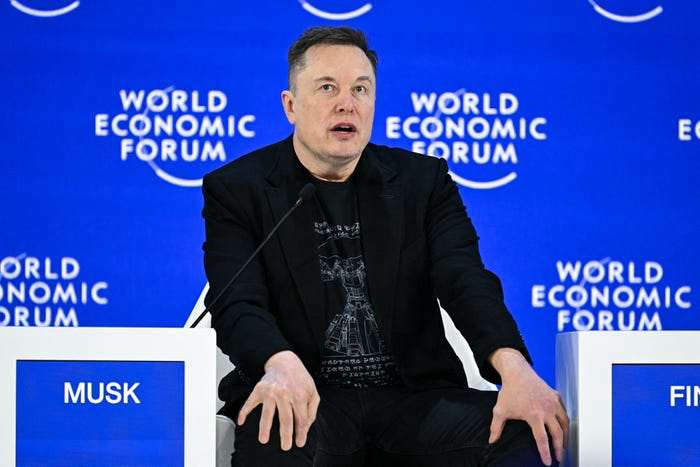
Elon Musk sketches a world where robots outnumber humans, and AI reshapes every economic assumption.
When Elon Musk stepped onto the stage at the World Economic Forum in Davos 2026. The moment carried irony. Musk long dismissed Davos as elitist, dull, and disconnected. Yet there he was, seated beside Larry Fink, addressing an audience of political leaders, financiers, and technologists eager to hear his latest predictions.
What followed felt less like a keynote and more like a worldview reveal. Musk did not hedge. He did not soften the edges. He argued that robots would soon outnumber humans, that AI would trigger an economic explosion, and that ageing itself was solvable. The room alternated between laughter, unease, and focused silence. Davos rarely receives certainty. Musk delivered it anyway.
What’s Happening & Why This Matters
Musk Returns to Davos With a Different Tone
Musk’s appearance is his first visit to Davos, despite years of public criticism. He joined a BlackRock-hosted conversation. Davos once represented the establishment he mocked. Now it served as a platform for his most ambitious claims yet.
Early moments set the tone. Larry Fink pushed the crowd for louder applause. Musk joked about geopolitics, aliens, and perception. Humour aside, his message stayed consistent. AI and robotics no longer sit at the edge of the economy.
This matters because Davos operates as a signal amplifier. Ideas voiced here ripple through governments, boards, and regulators. When Musk speaks here, markets listen, policymakers take notes, and competitors recalibrate timelines.
A Robot-Majority World
Musk’s most arresting claim came quickly. He predicted that more robots than people would be in the near future. Not centuries away. Not theoretical. He framed this shift as inevitable once robotics production scales.
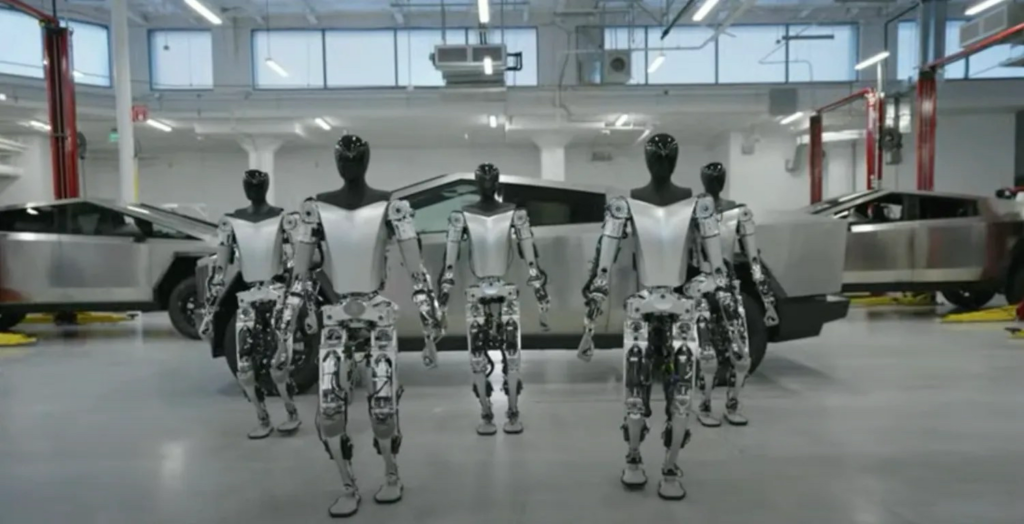
At the core sits Tesla’s humanoid program. Musk said Optimus will begin simple factory tasks this year, then advance toward complex industrial roles within roughly 12 months. He described robots as caretakers, factory workers, logistics staff, and household assistants.
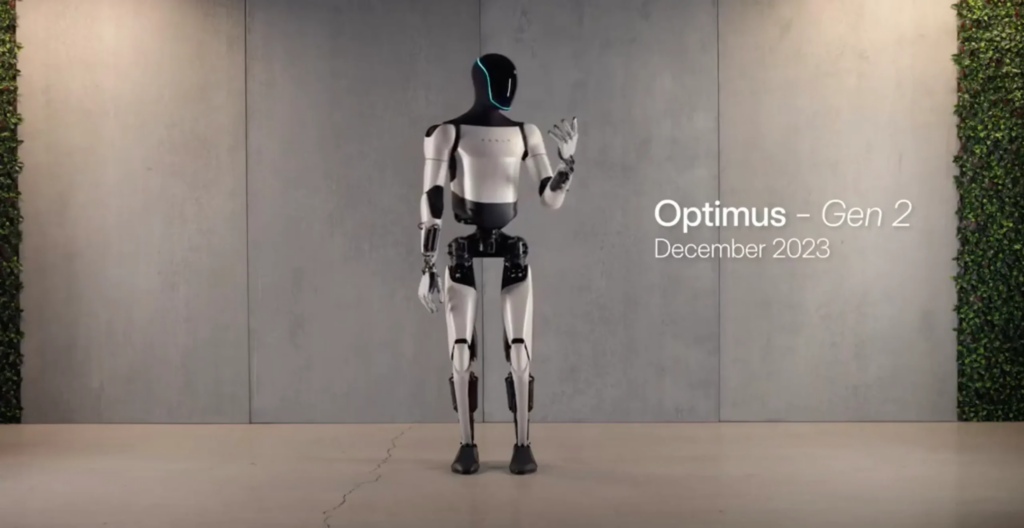
This claim reframes labour economics. A robot-majority world breaks assumptions around wages, productivity, and scarcity. Labour no longer limits growth. Energy, materials, and compute take that role instead. That transition unsettles governments built around employment-based taxation and social systems tied to work.
AI as an Economic Force Multiplier
Musk described AI and robotics as catalysts for an unprecedented economic surge. His language avoided nuance. He argued that AI saturates human needs by producing abundance across goods and services.
He predicted AI intelligence would surpass any individual human by the end of 2026, then would overtake collective human intelligence within five years, whether timelines hold matters less than the framing. Musk treats AI as an accelerating curve, not a gradual slope.
This perspective aligns with Tesla’s automation push and SpaceX’s engineering culture. Software-driven iteration replaces linear progress. In Davos terms, this challenges slow regulatory cycles. Governments move in years. AI moves in months.
From Factories to Families
Musk expanded beyond the industry. He asked why anyone would not want a robot to watch children, care for pets, or handle daily tasks, assuming safety standards are met. This framing shifts robotics from industrial efficiency toward emotional proximity.
That pivot matters. Public resistance often softens when technology enters domestic life as support rather than replacement. However, it also raises sharper questions about trust, surveillance, and dependency. A robot caregiver blurs boundaries between tool and companion.
Davos audiences grasp that distinction quickly. Policy frameworks lag behind consumer adoption. Musk’s framing pressures regulators to catch up before the technology normalizes itself.
Robotaxis and European Expansion
Musk also touched on transportation. Tesla already operates robotaxi services across several U.S. cities. He expects broader deployment soon and stated Tesla seeks European regulatory approval in the near term, though he avoided naming countries.
Autonomous transport changes urban design, insurance, and logistics. In Europe, where regulation often precedes deployment, Musk’s confidence tests institutional patience. Davos participants from transport ministries and city governments heard a familiar challenge: adapt faster or regulate irrelevance.
Ageing as a Technical Problem
Perhaps the most provocative claim arrived quietly. Musk said ageing represents a solvable problem. He suggested that scientists identify root causes once the data clarify patterns, describing the solution as obvious in hindsight.
This view treats biology as engineering — ageing shifts from fate to system failure. While many researchers urge caution, Musk’s framing influences investment. Capital follows confidence. Davos investors notice when longevity enters the same category as rockets and robots.
Power, Perception, and Criticism
Musk acknowledged past criticism of Davos. He once called it boring and accused it of resembling an unelected global government. His presence now creates tension. Some see pragmatism. Others see a contradiction.
Yet Davos thrives on contradiction. It hosts climate activists beside oil executives and regulators beside disruptors. Musk fits that mould perfectly. He challenges consensus while benefiting from the very systems he critiques.
Why Davos 2026 Feels Different
This session felt distinct from typical Davos futurism. Musk spoke less about aspiration and more about timelines. Factories. Deployment. Approval cycles. Economic effects.
Davos often trades in abstract visions. Musk offered operational claims. That shift unsettles because it narrows the gap between speculation and accountability. If robots fail to scale, critics point back here. If they succeed, this session will serve as a reference point.
TF Summary: What’s Next
Davos 2026 places Elon Musk’s robot-majority prediction into the mainstream policy conversation. His claims push AI, robotics, transport, and longevity from experimental to imminent. Governments, investors, and institutions now face compressed decision windows.
MY FORECAST: Robot adoption accelerates unevenly, first dominating logistics, manufacturing, and transport before entering homes. Regulatory friction slows deployment in Europe but fails to stop it. By decade’s end, debates shift from job loss toward governance of abundance, trust, and human purpose.
— Text-to-Speech (TTS) provided by gspeech | TechFyle