


Your Chatbot Hums Along, Names the Track, and Remembers Your Taste
Song discovery used to work like this: you heard a track in a café, a taxi, a shop, or a terrible Instagram Reel, then spent the next hour mumbling half a lyric into a search bar like a confused poet. Then Shazam arrived and made that problem look prehistoric.
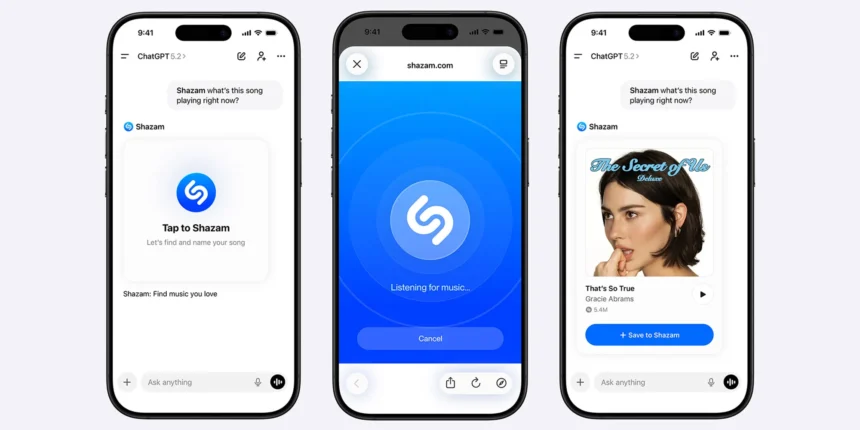
The next twist: ChatGPT is adding Shazam into the mix, which means the chatbot can help identify songs, surface artists and track details, preview music, and store discoveries in a Shazam library.
That sounds small until you see the bigger pattern. AI assistants are no longer just answer machines. They are becoming media companions that listen, recognise, remember, recommend, and organise. In plain English, the chatbot is starting to act less like a search tool and more like the annoyingly informed friend who always knows the song title, the remix, the producer, and what else you might like.
The feature presents a deeper question. When a chatbot can identify songs and, optionally, remember your musical taste, where does music discovery end and behavioural profiling begin?
Welcome to the weird little crossroads where convenience, memory, and personal taste data all start sharing one set of headphones.
What’s Happening & Why This Matters
ChatGPT Adds Shazam’s Recognition Tech

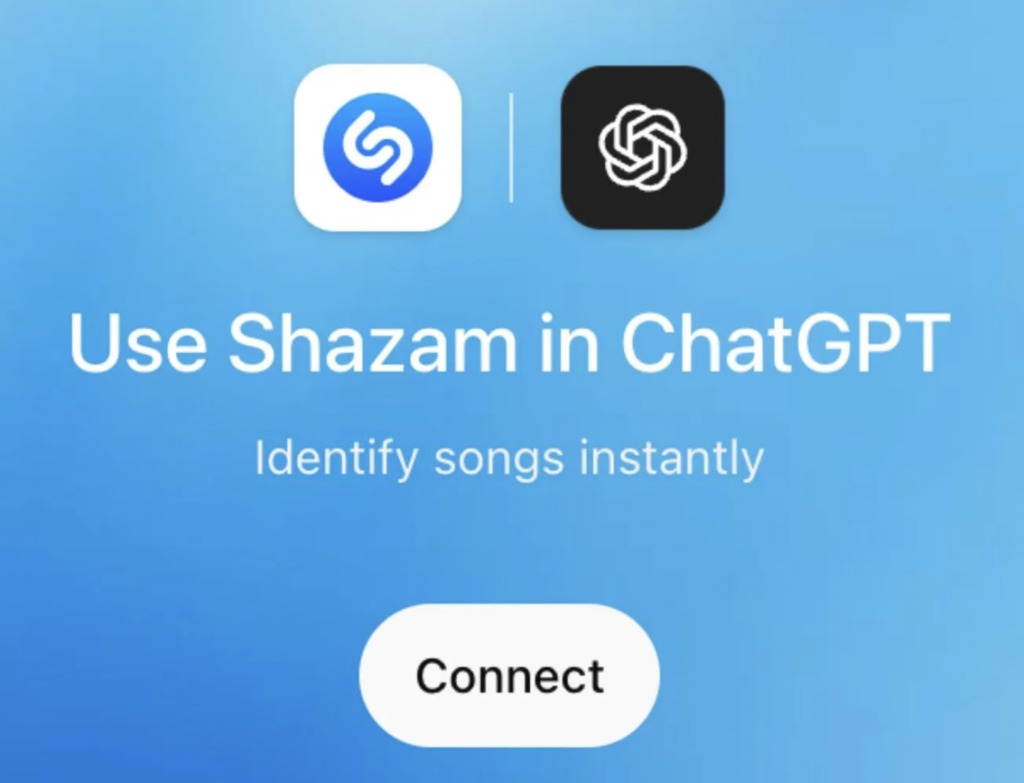
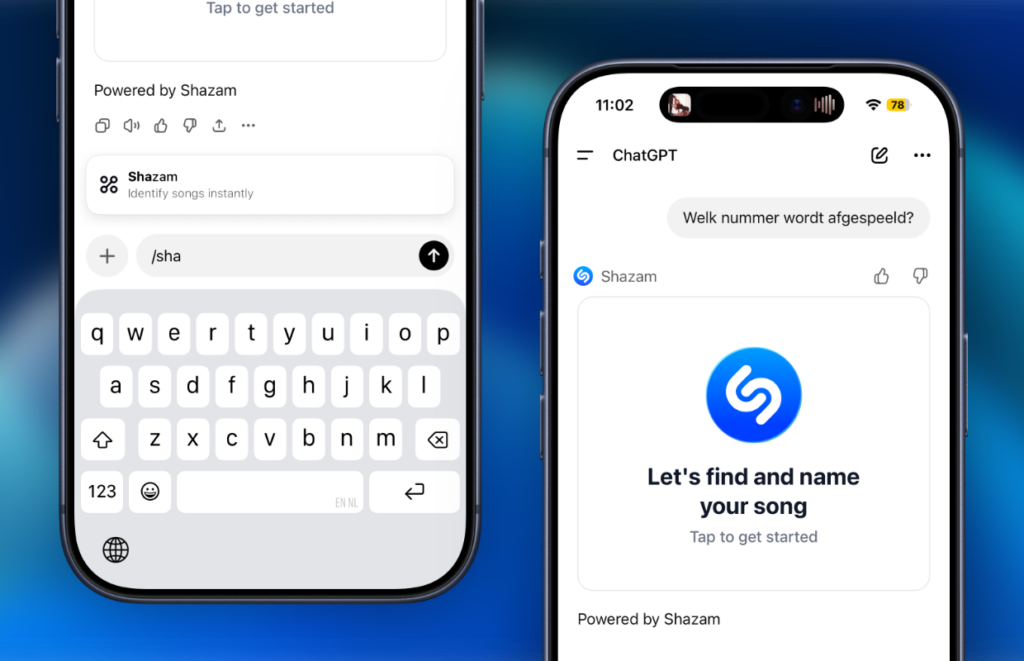
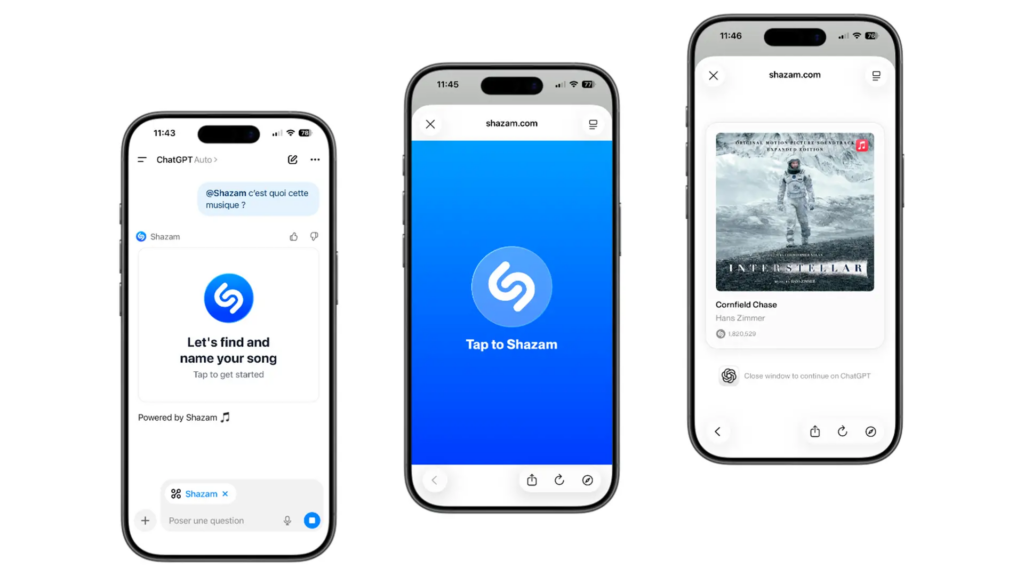
The new feature lets users connect Shazam to ChatGPT so the bot can identify songs through Apple’s music-recognition technology. The app description says users can add @Shazam in a prompt to discover music using the same recognition system “trusted by hundreds of millions worldwide.” It says users can preview songs in-line and save discoveries directly to their Shazam library.
Shazam has long been a specialist tool. It does one thing well: listen, match, identify. ChatGPT, by contrast, is a generalist interface. It can chat, summarise, generate playlists, answer follow-up questions, compare artists, and connect the result to other music services.
When those two roles merge, the experience changes. You are no longer simply asking, “What song is this?” You can ask:
- What song is this?
- Who sings it?
- What genre is it?
- What else sounds like this?
- Make me a playlist based on it.
- Remember that I like this style.
That shift turns music recognition into conversational music discovery.
Extending ChatGPT’s App Ecosystem
The Shazam connection is not appearing in isolation. The file notes that Shazam joins a growing list of ChatGPT apps and integrations that already includes services such as Adobe Express, Asana, Canva, OpenTable, PayPal, and Slack.
That context is important. OpenAI is slowly turning ChatGPT into a hub that connects tools and services rather than acting as a stand-alone chatbot.
In other words, ChatGPT is not trying to be Shazam. It is trying to be the layer above Shazam.
That platform strategy is clever. Users don’t need to open ten apps for ten tasks. They can stay within a single conversational interface and call external tools as needed. For music, that means song identification is one step in a larger chain of actions: recognise, preview, save, recommend, playlist, remember.
This is when software starts to get “sticky.” You do one useful thing. Then the app quietly offers four more.
ChatGPT Can Remember Your Music Taste
The most interesting part of the feature may not be the song recognition itself. It may be the memory toggle.
According to the file, there is an option that allows ChatGPT to reference previous conversations about your music taste or what it has learned about you.
That sounds convenient. It probably will be convenient. A chatbot that remembers your taste in ambient jazz, Brazilian funk, post-punk, or 2000s R&B can make much better recommendations than one that starts cold every time.
But convenience always travels with a shadow.
Once the chatbot remembers what you listen to, your music habits are part of the system’s understanding of you. Taste is not trivial data. It can reveal mood, age, subculture, language, politics, religion, nostalgia patterns, and social identity. A playlist is a diary wearing better shoes.
The file notes that neither Apple nor OpenAI explicitly explains whether Shazam usage will influence future conversations, though enabling memory may mean music details are part of ChatGPT’s stored understanding of your preferences.
That uncertainty matters. People often consent to a feature without really grasping what “remembering” means over time.
More Than Song Recognition
On paper, this looks like a music feature. In practice, it points toward a future where AI assistants act as personal media curators.
Voice assistants already identify songs. Shazam already does it. Apple Music and Spotify already recommend tracks. So what changes here?
The answer is synthesis. A normal song-recognition app gives you a match. A chatbot layered on top of that can give you context. It can
- Explain why the track sounds familiar,
- Compare the artist to five others,
- Build a mood-based playlist,
- Remember your recent discoveries,
- Connect your taste across services.
That makes the interface more human and more persistent. It increases user dependence on the assistant as the organising layer for digital life.
Once you rely on the bot to remember what you like, you stop using it as a tool and start using it as a companion system.
Apple and OpenAI Are Quietly Blending Ecosystems
There’s a subtle strategic angle here, too.
Shazam is an Apple property. ChatGPT is an OpenAI product. The file notes that OpenAI had already introduced an Apple Music app for ChatGPT, allowing users to create playlists and listen to tracks, while rival services such as Spotify can integrate through OpenAI integrations.
That matters because it shows a more flexible ecosystem than many expected. Instead of forcing users into one closed music lane, ChatGPT appears happy in the middle and helps route actions across multiple services.
That makes ChatGPT stronger as an interface layer while letting Apple’s Shazam tech remain central to identification.
It’s a pragmatic alliance. Apple contributes best-in-class music recognition. OpenAI contributes conversational intelligence. The user gets a smoother path from “what is this song?” to “save it, recommend more, and build me a playlist.”
That’s the kind of feature that sounds modest in a press blurb and then quietly changes everyday habits.
Music Discovery Gets Less Fragmented
One of the file’s smartest observations is that identified songs can easily get lost inside sprawling chat logs that jump from one topic to another. Shazam integration helps avoid that by letting users save songs directly into a Shazam account or route them into playlists.
That solves a real problem.
Without a memory layer or library connection, conversational discovery gets messy. You ask about a song, then pivot to dinner plans, then ask about airline baggage fees, then forget the artist you just found twenty minutes ago.
A library-backed chatbot is much more useful because it closes the loop. Discovery leads to storage. Storage leads to playlists. Playlists lead to habits. Habits lead to loyalty.
That’s not accidental. That’s product design doing its thing.
The Privacy Question Is Not Going Away
The strongest counterweight to all the convenience is the privacy question.
Music taste feels harmless because it is familiar. Yet recommendation systems, streaming platforms, and assistant memory tools all turn taste into data. When song recognition moves into a chatbot that can store memory, that data becomes more intimate.
A standard music app might know what you saved. A conversational assistant may know why you saved it.
That difference matters. If you tell a chatbot, “I love this because it reminds me of my father,” or “find songs like this for when I’m anxious,” the assistant is no longer logging only media preference. It is logging emotional context.
Nothing in the file claims misuse. But the structure of the feature points to a future where user trust depends heavily on clear memory controls, transparent settings, and simple ways to opt out.
AI Assistants As Cultural Interfaces
Underneath the product update is a transformation: AI assistants are becoming cultural interfaces.
They do more than fetch facts or schedule meetings. Integrated assistants help interpret songs, find restaurants, book tables, draft artwork, compare products, and manage personal taste. Al chatbots are becoming the conversational layer between users and culture itself.
That means their influence grows quietly. If the assistant becomes your main way to discover music, then it begins shaping what you hear, how you categorise it, and what you find next.
That is powerful. It is a bit eerie because recommendation engines have already shown how much influence they can exert without ever needing to appear “in charge.”
A chatbot with memory may prove even more persuasive because it sounds personal rather than algorithmic.
TF Summary: What’s Next
ChatGPT’s Shazam integration brings song recognition into a conversational workflow. Users can identify tracks, preview music, save discoveries to Shazam, and build playlists through connected services such as Apple Music or Spotify. The feature introduces a more personal layer, since ChatGPT can optionally reference past conversations and remember parts of a user’s music taste.
MY FORECAST: Music recognition will become a standard feature inside general AI assistants, not a separate novelty app. The next phase will combine recognition, recommendation, memory, and cross-service automation into one seamless media assistant. That will make discovery faster and more fun. It will force sharper scrutiny around preference tracking, memory controls, and how much of your taste profile you want an AI system to keep. The convenience is real. So is the data trail.
— Text-to-Speech (TTS) provided by gspeech | TechFyle