


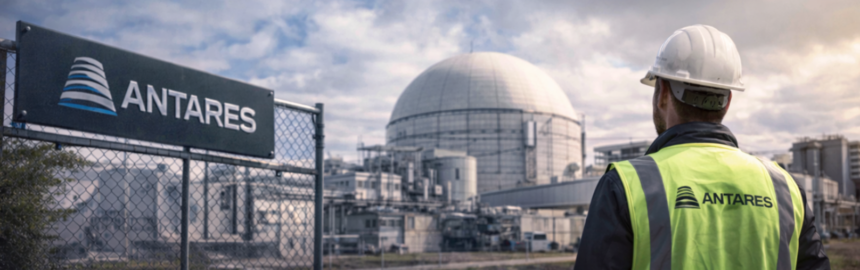
Backing big talk. Antares walked out with a federal safety approval, which is better than a glossy rendering and dramatic lighting.
Antares received a key U.S. Department of Energy safety approval for the company’s Mark-0 demonstration reactor. The milestone moves the Idaho-based nuclear startup into the final pre-startup phase under the DOE’s accelerated Reactor Pilot Program. In plain English, Antares is closer to switching from pitch decks and engineering updates to a live reactor demonstration.
That development deserves attention because advanced nuclear is full of brave language and very short on real operating hardware. Everyone in the sector promises cleaner energy, better safety, faster deployment, smaller footprints, and a happier grid. Much fewer companies reach a point where a federal agency has accepted the final safety case for a real reactor design. Antares has now crossed that line, at least for the next stage.
What’s Happening & Why This Matters
Antares Clears a Serious Federal Safety Gate
Antares said the DOE approved the Documented Safety Analysis, or DSA, for the Mark-0 reactor under DOE Standard 1271. The company described the approval as DOE acceptance of the reactor’s final design and the safety case supporting the system. That detail matters because a safety analysis is not decorative paperwork. A safety analysis is the hard document that tries to prove the machine can be built, operated, and controlled without turning optimism into a public hazard.
Antares had already received approval for the Preliminary Documented Safety Analysis in January 2026. The newer approval pushes the company further down the path toward startup authorization. The next major step is the DOE Readiness Review, which Antares says is the final phase before DOE startup approval and first criticality.
That phrase, first criticality, carries the real electricity here. It is the point at which the reactor achieves a self-sustaining nuclear chain reaction. In the advanced nuclear world, plenty of startups talk about future criticality. Very few get close enough for the sentence to stop sounding theoretical.
So yes, this is a bureaucratic milestone. Bureaucratic milestones in nuclear are often the real milestones.
Mark-0 Is Built for a Very Specific Market
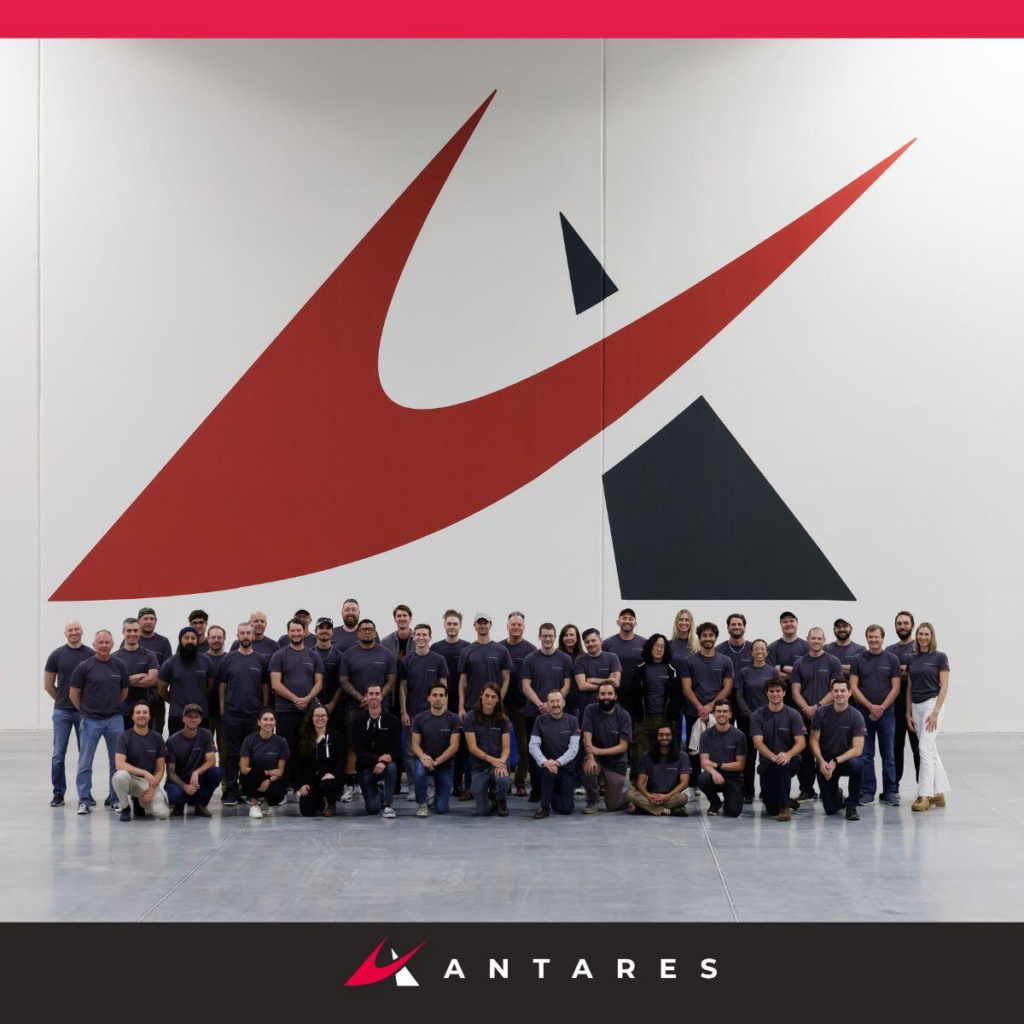
Antares is not trying to outmuscle conventional utility-scale reactors. The company is building a smaller microreactor designed for defense and space applications. That focus changes the commercial story.
Large reactors fight brutal battles over capital costs, construction risk, and decade-long project timelines. Microreactors pitch a different future. Smaller footprint. Faster deployment. Simpler site requirements. More modular construction. More value for remote operations, military use, and off-grid power needs.
That is where Antares wants to live.
The company has positioned Mark-0 as a demonstration step rather than a full commercial endpoint. That is smart. Startups that promise everything at once tend to crash into physics, procurement, and regulation all at once. A demonstration reactor keeps the scope tighter. A demonstration reactor lets a company prove the fundamentals before trying to conquer larger commercial ground.
That focus on defense and space gives Antares a sharper opening than the usual “we will decarbonize the whole grid” pitch. The company can target customers who care deeply about compact, dependable energy in difficult environments. Those customers are often less sentimental and more practical.
That can be a huge advantage.
The DOE Pilot Program Accelerator

The broader context makes the story more interesting. Antares is part of the DOE’s Reactor Pilot Program, launched after a 2025 executive order aimed at accelerating advanced reactor demonstrations. The program’s headline goal is bold: at least three test reactors should achieve criticality by 4 July 2026.
That timeline is aggressive enough to sound slightly unhinged, which is part of the point. Washington wants to prove the United States can move faster on advanced nuclear instead of spending years applauding itself for future ambition, while China, Russia, and other competitors keep moving.
The pilot structure helps participating firms by routing them through DOE authorization rather than the slower, more expensive Nuclear Regulatory Commission path used for commercial licensing. That does not make the process easy. That does make the process more achievable for demonstrations on a compressed schedule.
In practical terms, the DOE has built a faster lane. Antares is one of the companies trying to use it before the lane gets clogged with politics, funding fights, or the usual institutional slowdown.
That is why the approval matters beyond one startup. Antares is not only testing a reactor. Antares is testing whether the federal government can actually accelerate nuclear demonstrations without drowning the effort in delay.
An Ambitious Timeline to Viable Usage

Antares has been working toward a July 2026 criticality target. Reuters reported earlier this year that Antares remained hopeful about hitting that deadline under the Reactor Pilot Program, alongside a handful of other startups.
That deadline is both exciting and dangerous.
Exciting, because the U.S. advanced nuclear sector badly needs a visible operating success. Dangerous, because any public miss will hand critics fresh ammunition. Nuclear skeptics already believe the industry runs on deadline slippage, cost escalation, and grandiose promises. A startup that talks about July and misses by a mile will not get much sympathy.
Still, a tough deadline is better than a vague dream. At least Antares has something concrete on the calendar.
The company has already started building the Mark-0 reactor and has used the early-2026 approvals to strengthen the case that the schedule is more than marketing. That does not guarantee success. Nuclear hardware does not care about enthusiasm. The milestone suggests the company has moved further into execution than many outsiders probably realize.
That is worth noting because advanced nuclear has a branding problem. Plenty of people hear “startup reactor” and picture another futuristic promise, with beautiful renderings and a very thin relationship to the real world. Antares is starting to give the sector a rarer image: steel, paperwork, reviews, and an actual countdown.
Needing Real Wins, Better Narratives

The advanced nuclear market has spent years building a polished public case. Cleaner baseload power. Energy resilience. Strategic security. Industrial competitiveness. Military relevance. AI-era data center support. Every one of those themes carries real weight.
None of them replaces proof.
That is why a DOE safety approval lands harder than another op-ed about why nuclear deserves a brighter future. The industry does not need more mood boards. The industry needs more machines moving through real gates.
Antares is one of several startups trying to supply that proof. Others in the pilot program, including Aalo, Oklo, Deep Fission, Radiant, Last Energy, and others, are all trying to show that small advanced reactors can move faster than the old utility-scale nuclear model ever did.

One clear success would help the whole sector. A string of visible failures would wound the whole sector, too.
That collective pressure explains why the Antares story carries more significance than a single company press release. In a market like this, every approval has symbolic force. Every missed milestone has symbolic force, too.
The field does not have infinite patience.
Antares Still Has Plenty Left to Prove
A DOE approval is a serious achievement. A DOE approval is not a commercial victory.

Antares still has to clear the readiness review, achieve criticality safely, run the reactor as intended, and demonstrate sufficient reliability to earn future customers’ trust. After that comes the harder commercial work: scale, manufacturing, cost control, fuel, operations, maintenance, and the long argument around whether the design can move beyond a demonstration unit.
That gap between technical approval and commercial durability is where many advanced energy companies start sweating.
Investors know it. Policymakers know it. Competitors definitely know it.
The smart reading of the moment is neither breathless nor dismissive. Antares has earned real credit. The company has not won the war. The company has won a meaningful round in a sector where meaningful rounds are hard to come by.
That alone makes the announcement important.
TF Summary: What’s Next
Antares has secured a major DOE safety approval for the Mark-0 demonstration reactor, advancing the company into the final pre-startup phase under the federal Reactor Pilot Program. The move follows the company’s preliminary safety approval in January 2026 and puts the reactor closer to readiness review, startup approval, and first criticality. For a sector drowning in ambition and still starving for operating proof, that is a serious step forward.
MY FORECAST: Antares will draw more attention because the company has moved beyond theory and into a visibly harder stretch of execution. A successful criticality milestone before 4 July 2026 would give the DOE pilot effort a badly needed flagship win and give advanced nuclear boosters something sturdier than hope. A delay would not kill the company, but it would feed every old complaint about nuclear timelines. The next few months matter a lot.
— Text-to-Speech (TTS) provided by gspeech | TechFyle