


Amazon modifies its retail strategy amid layoffs and as physical grocery experiments scale back.
Amazon just made a loud move in the retail world. The company is cutting roughly 16,000 jobs and closing its Amazon Go and Amazon Fresh stores across the U.S.
This is not a small adjustment, but a major reset. Amazon steps back from parts of its physical store strategy and leans harder into grocery delivery and Whole Foods Market expansion.
Amazon has always experimented fast. It also ends them at the same speed.
The result feels clear: Amazon wants fewer distractions, tighter economics, and a retail footprint that actually scales.
What’s Happening & Why This Matters
Amazon Cuts 16,000 Roles Across the Business
Amazon eliminates about 16,000 jobs as it restructures teams and reduces costs. The layoffs touch multiple groups, including retail, devices, and internal operations.
The layoffs follow several years of hiring surges, pandemic growth, and then a sharp slowdown in consumer spending.
Amazon now focuses on efficiency. Investors demand profitability. Customers demand speed. That combination forces hard decisions.
Layoffs at this scale send a message across the tech and retail industries: the era of unlimited headcount growth ends.
Amazon Shuts Down Amazon Go and Amazon Fresh Locations
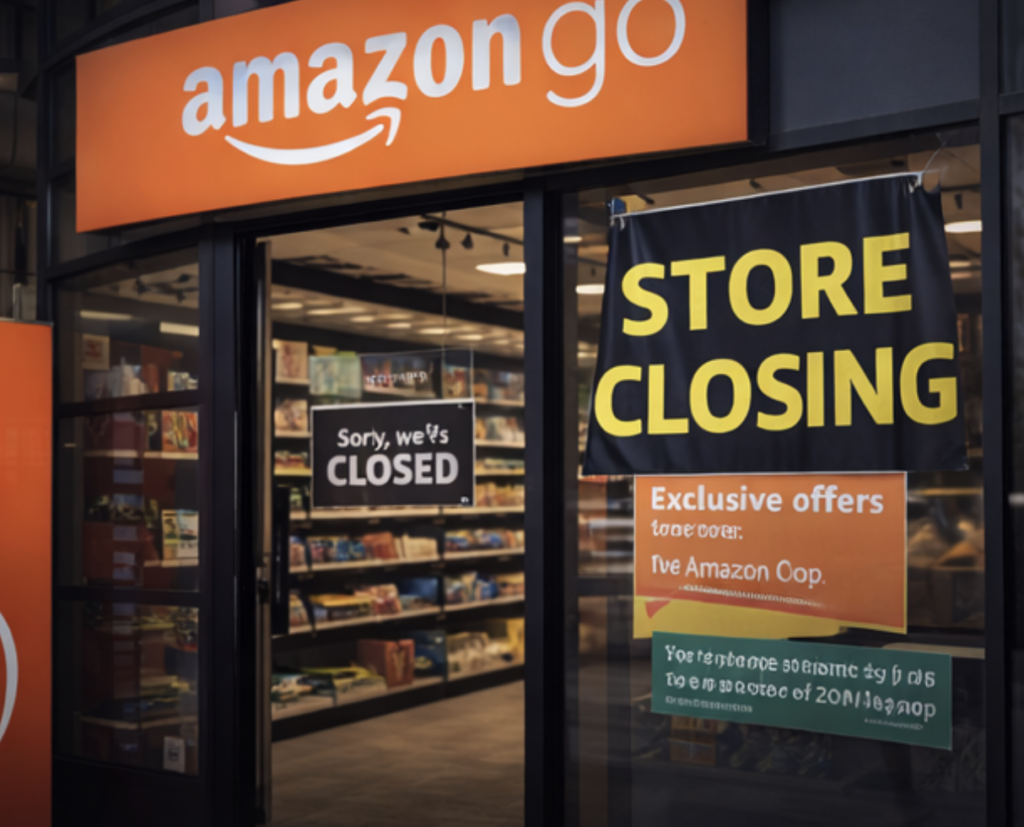
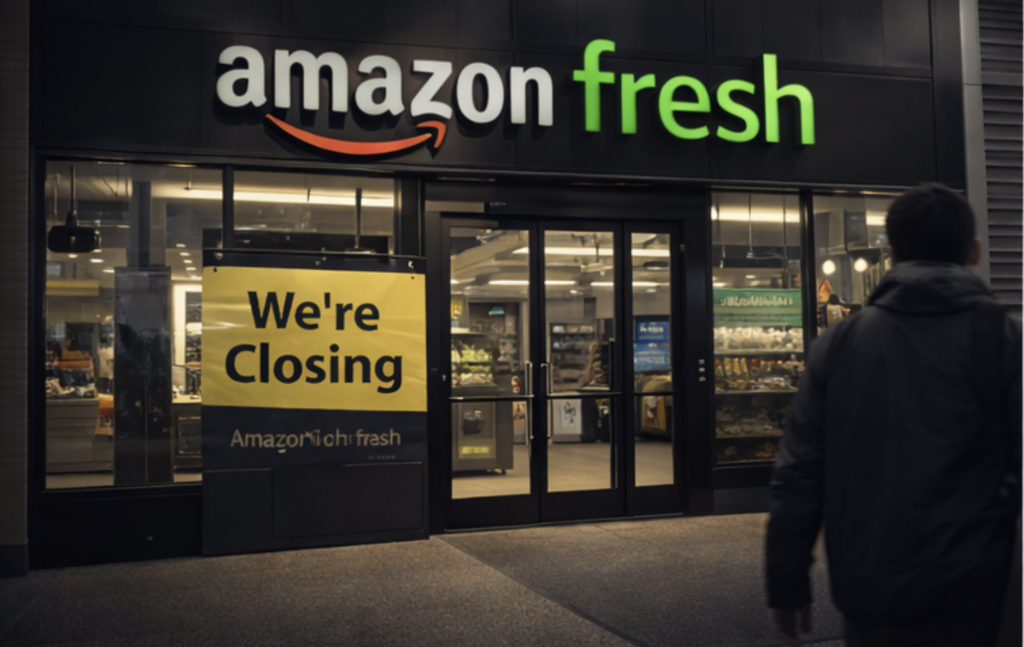
At the same time, Amazon closes all of its Amazon Go and Amazon Fresh stores. The company confirms that the last day of operation is expected to be around early February. Some California stores will stay open longer due to state rules.
Amazon operates 57 Amazon Fresh stores and 15 Amazon Go stores, but it no longer sees the model working at scale.
Amazon admits the issue directly:
“We haven’t yet created a truly distinctive customer experience with the right economic model needed for large-scale expansion.”
That quote matters. Amazon rarely speaks that plainly.
This is Amazon saying: the experiment teaches lessons, but the math does not work.
Whole Foods Becomes the Core Grocery Bet
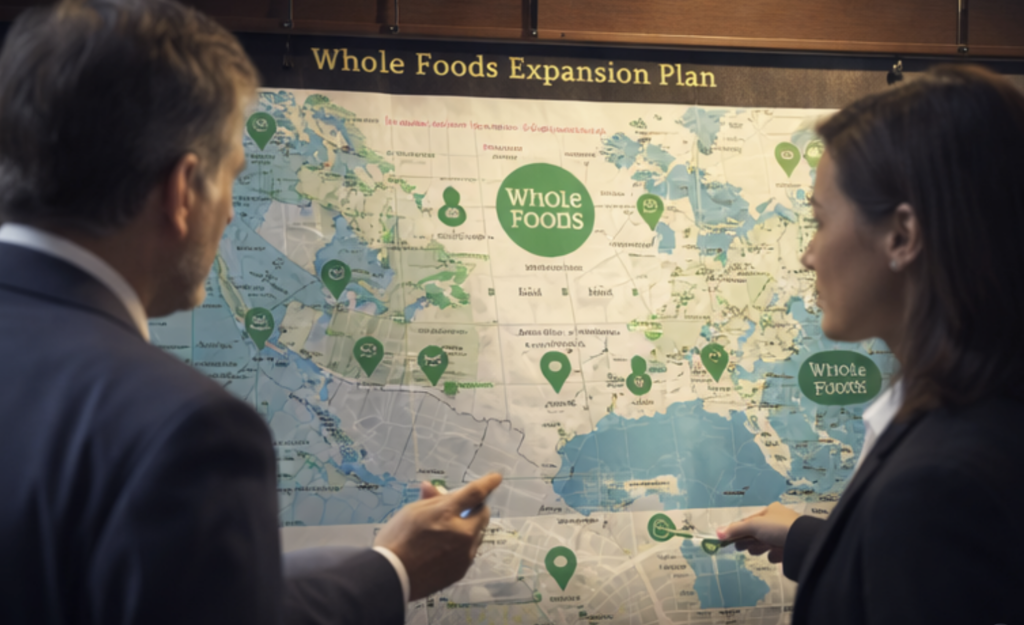
Amazon does not abandon grocery. It refocuses. The e-commerce leader shifts its attention to Whole Foods Market, which it acquired in 2017. Amazon reports Whole Foods has delivered over 40% sales growth since the acquisition.
Amazon now plans to open more than 100 new Whole Foods stores in the coming years. That is the opposite of retreat. It is concentration.
Whole Foods gives Amazon a brand customers trust, a proven store model, and higher margins than experimental formats.
Grocery Delivery Wins Over Grocery Real Estate
Amazon also pushes grocery delivery harder than ever. The company now delivers groceries to 5,000 U.S. cities and towns, including many with same-day options.
Amazon says customers want speed and convenience, not novelty stores. Delivery scales better than physical checkoutless retail. It also fits Amazon’s logistics empire.
This is where Amazon dominates: fulfillment, routing, and last-mile delivery.
“Just Walk Out” Technology Lives On
Even though Amazon Go stores are closing, the technology survives.
Amazon built its famous “just walk out” checkout system inside these locations. That tech runs in more than 360 third-party sites across five countries.
Amazon also uses it internally: More than 40 North American fulfillment centers already deploy it in employee breakrooms.
So Amazon does not kill the invention. It kills the store format. That is classic Amazon behavior: extract the useful machine, and discard the wrapper.
Customers Feel the Whiplash
Store closures hit real people fast. In Chicago, shoppers arrive at an Amazon Fresh location only to find it closed with little explanation.
One customer says:
“What’s the reason for the close? It’s not telling you anything.”
That confusion reflects the broader truth: physical retail still depends on trust, stability, and human expectation. Amazon’s rapid experimentation sometimes collides with everyday shoppers.
Amazon Plans New Retail Concepts Anyway
Amazon never stops tinkering. Even while closing stores, Amazon teases a new “supersized” retail concept. The company calls it a “new supercenter” where customers shop for groceries, household goods, and general merchandise in one place.
Amazon also tests “Amazon Grocery,” a smaller format launched alongside Whole Foods in Chicago. Grocery’s closure is not the end of physical retail. It is the end of these versions.
Impact: Retail Consolidation Accelerates
Amazon’s pullback reshapes the market. Competitors like Walmart, Kroger, and Costco already dominate grocery economics. Amazon realizes it cannot brute-force grocery stores the way it brute-forced e-commerce.
The lesson is blunt: grocery margins stay thin, even for giants. Amazon’s layoffs and closures reinforce an industry trend:
Retail technology experiments survive only when paired with profitable fundamentals.
TF Summary: What’s Next
Amazon cuts 16,000 jobs while closing Amazon Go and Amazon Fresh stores. The company steps back from unproven physical grocery models and doubles down on Whole Foods and grocery delivery. Amazon keeps its “just walk out” technology alive, but it exits the store formats that fail to scale.
MY FORECAST: Amazon rebuilds retail around fewer, stronger pillars. Whole Foods grows. Delivery expands. Experimental stores shrink unless the economics finally click.
— Text-to-Speech (TTS) provided by gspeech | TechFyle