


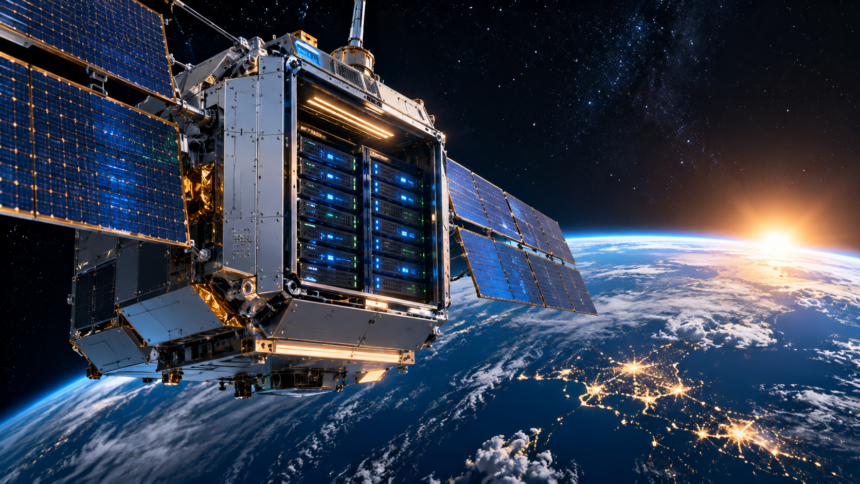
A data centre-class chip answered a prompt in space, and twin satellites follow in 2027
The Google space data centre test produced the first AI response from a data centre-class TPU in orbit. TF checked the claim. One prototype satellite passed a first test, well short of a working orbital data centre.
What’s Happening & Why It Matters
What Google Tested
Google (@Google) launched its Project Suncatcher prototype on 1 October 2026. The satellite flew on SpaceX’s Transporter-18 rideshare mission, and Planet helped build the spacecraft. Engineers finished a commissioning checklist, including powering up the host and TPU trays, then ran machine learning tests.
On a ground-station pass, the team uplinked a prompt asking the onboard Gemma 4 model for a space haiku. The reply came down as the satellite passed Svalbard, Norway. Follow-up prompts covered limericks and telemetry reports on payload systems. Google published the result on 30 October 2026.
What the Result Proves
Google calls the test its “Hello World” milestone. The chip started, ran a model and returned an answer through a ground link. Each step carries risk, because radiation and vacuum damage standard hardware.
Google has not disclosed the TPU count or generation, the orbit, latency, power draw, operating temperature or mission cost. Some headlines call the test a space data centre, but Google describes a single prototype satellite. Travis Beals, a senior director at Google, says reliable execution in space paves the way for the next milestone.
Radiation, Heat and the 2027 Plan
Next come tests of TPU performance under thermal stress and radiation exposure in orbit. Google then plans twin interconnected satellites in 2027. An earlier announcement pointed to early 2027, while the October update gives a bare 2027.
Linking two satellites is the harder step. A useful orbital data centre needs many chips talking to each other at high speed. Google keeps spending on ground capacity, as TF covered in its Alphabet earnings analysis.
My take: Google deserves credit for flying real hardware instead of publishing a concept. A haiku is a modest result. The 2027 twin-satellite mission will show if orbital compute scales, and radiation data will decide chip lifespans.
TF Summary: What’s Next
Google will publish thermal and radiation results from the prototype. Engineers will prepare the twin-satellite mission for 2027. Rivals will cite the test as proof of viability.
MY FORECAST: Google will keep its 2027 twin-satellite date. No orbital data centre will serve paying customers before 2030. Radiation results will decide Google’s next hardware design.
Related Stories
- Alphabet and Microsoft Earnings: Azure Up 48%, Google Cloud Up 103%
- Google Unveils Gemini 4 Carbon, a Vulnerability-Hunting Model Few Can Use
- Satellite Wars: Globalstar, SpaceX Spectrum and the FCC
- Amazon Leo Hits 400Mbps in US Army Test
- Virgin Galactic Unveils Apeiron, Its Delta-Class Spaceship