


AI Trust: A Dual Challenge of Recovery and Security
As artificial intelligence (AI) technologies become increasingly integrated into enterprise operations, the necessity for AI trust has emerged as both a recovery and security challenge. With AI agents accessing vast amounts of enterprise data and adversaries leveraging advanced models to identify vulnerabilities more efficiently, merely possessing data is insufficient for business resilience.
This evolution is necessitating that data protection evolve from a back-office function to a key component of core infrastructure design. Dell Technologies Inc. is actively enhancing its cyber recovery solutions to address these evolving risks, according to Simon Jelley, Vice President of Product Management at Dell.
“The reality is, within the trusted AI adoption, it requires more than just protecting the actual model itself,” Jelley stated. “You must recognize that in this interconnected software landscape, any software connection carries potential vulnerabilities. Therefore, resilience must be integrated into the architecture itself.”
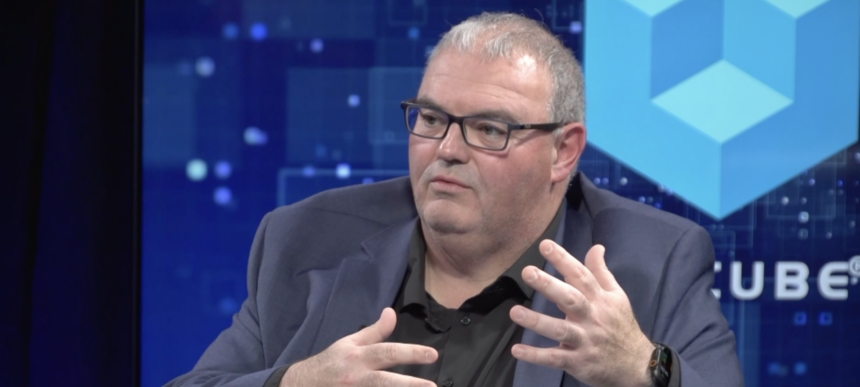
Jelley shared his insights during an exclusive interview with Christophe Bertrand on theCUBE, SiliconANGLE Media’s livestreaming studio, as part of the AI Cybersecurity and Resilience Summit. They delved into the importance of proving recoverability, which has become more critical than simply maintaining backup systems. (*Disclosure below.)
Integrating AI Trust into Recovery Architecture
Two primary factors are driving this shift. First, AI amplifies both the value and the volume of enterprise data, while second, advanced models enable attackers to exploit multiple low-severity vulnerabilities to formulate a successful attack strategy. This necessitates a shift in how businesses approach resilience, according to Jelley.
“Enhancing data efficacy is only part of the equation; it’s crucial to embed resilience into the core business processes,” he emphasized. “Resiliency must be an intrinsic element of both the architecture and the overall business process being delivered.”
Dell utilizes a vault strategy to maintain a secure copy of data, separate from the production network and outside the identity privileges connected to primary systems. Jelley pointed out that immutability alone does not equate to isolation.
“Our experience with thousands of organizations implementing vaults has shown that not all utilize an intelligence layer effectively. Notably, some have attempted recovery from data that contained time bomb threats,” he noted. “It’s not enough to just isolate your data and assume you have a reliable recovery copy. How can you be certain that the recovery copy is ultimately untainted? This assurance is critical when you’re striving to maintain the integrity and continuity of your business.”
For a more comprehensive understanding, view the complete video interview, which is part of SiliconANGLE’s and theCUBE’s coverage of the AI Cybersecurity & Resilience Summit:
(*Disclosure: Dell Technologies Inc. sponsored this segment of theCUBE. Neither Dell nor other sponsors have editorial control over content on theCUBE or SiliconANGLE.)