


Utah Becomes First State to Approve AI-Driven Prescription Refill Automation
Utah has officially become the first state in the United States to allow an artificial intelligence startup to automate the approval of prescription refills with limited human oversight. This significant regulatory move is aimed at enhancing healthcare accessibility and efficiency.
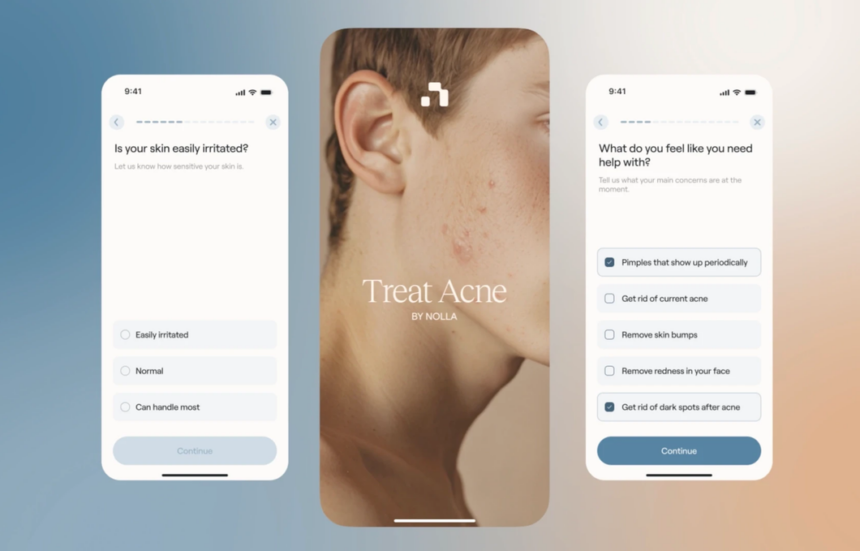
Nolla Health, the innovative startup behind this initiative, announced in a blog post that it has received the green light from Utah officials to initiate a pilot project. This project will enable individuals suffering from acne to consult with an AI agent, submit a photograph of their condition, and obtain a prescription automatically—bypassing the need for an in-person consultation with a physician. “This makes Nolla the first-ever end-to-end AI doctor,” stated Luis Wenus, founder of Nolla Health, in a post on social media.
The Nolla Derm app, available on iOS, employs an AI model that curates a list of physician-approved topical treatments tailored to individual users. If a patient’s request exceeds the established parameters, it will be referred to a licensed medical professional. The approval process requires users to complete an initial intake before interacting with the AI. Once approved, patients can describe their acne conditions, upload relevant facial scans, and receive personalized treatment recommendations.
Patients will then have the flexibility to collect their prescriptions from a local pharmacy or have them delivered directly to their homes. The app also enhances patient engagement by tracking daily skin progress through scans and updating treatment plans on a monthly basis based on effectiveness.
Initial Stages of Pilot Approval
The pilot project was launched after receiving approvals from several entities, including the Utah Office of Artificial Intelligence Policy, the Utah Division of Professional Licensing, the Utah Medical Association, and the American Academy of Dermatology. Under the terms of the agreement, the AI system is currently limited to prescribing topical creams for acne treatment and is prohibited from issuing prescriptions for isotretinoin or any oral medications.
The pilot program consists of three phases. In the initial phase, every AI-generated prescription will undergo approval by two physicians prior to reaching the user. After processing at least 100 patient prescriptions without significant complications, the program will progress to the second phase, where the AI will directly issue prescriptions without prior human approval, followed by a review by physicians post-factum. This stage will encompass 500 patients, as indicated by Nolla Health.
Finally, in the third phase, physicians will review a minimum of 10% of all automated prescriptions monthly. This pilot initiative is part of Utah’s AI Learning Lab sandbox program, which aims to provide AI startups with regulatory relief to test new products under supervision. “Participation in our AI sandbox does not imply that the State of Utah has approved, endorsed, certified, or vouch for the product,” notes the Utah Office of Artificial Intelligence Policy on its authorized pilots page.
Acne Management as a Testing Ground for AI Applications
During an interview with Inc.com, Nolla Health’s Chief Medical Adviser, Zaid Fadul, emphasized that while acne treatment serves as the initial focus, the company’s aspirations extend far beyond this condition. The startup aims to automate prescription services for various common ailments that can be effectively assessed remotely and treated with medications having robust safety profiles.
“Beyond dermatology, conditions like influenza and uncomplicated urinary tract infections deserve exploration, especially as testing can yield objective data to complement patient symptoms and medical histories,” Fadul remarked. He stressed the importance of having clear safeguards in place for the deployment of AI in medical contexts.
Looking ahead a decade, Fadul envisions AI taking a substantial role in managing routine healthcare procedures, such as diagnostics, treatments, prescription refills, and routine tests. However, he remains cautious about AI’s involvement in more critical medical situations, complex diagnoses, and high-risk medication management.
Fadul voiced concern regarding certain high-risk medications, including stimulants and opioids, stating that the risk of potential manipulation by patients poses challenges for AI-led prescribing. “It may take time to gather sufficient evidence and establish appropriate safeguards for the autonomous prescription of these drugs,” he concluded.