


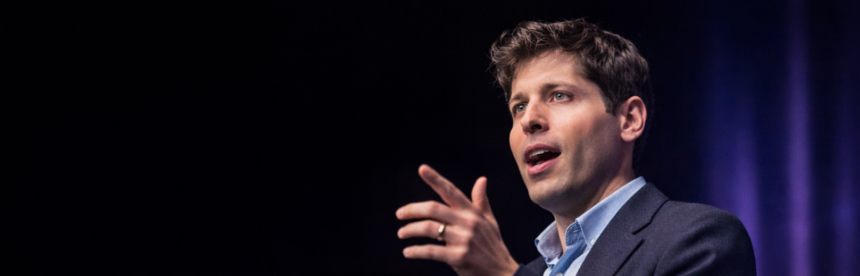
Sam Altman wants the public to picture an AI future with shorter workweeks, shared upside, and fewer conflicts.
OpenAI has started floating a much friendlier story about the AI economy. The company wants policymakers and the public to picture a future with a 32-hour workweek, a public wealth fund, robot-tax-style ideas, stronger worker protections, and access to AI-driven prosperity. That is the polished sales pitch. The rougher backdrop is harder to ignore. A fresh wave of scrutiny around Sam Altman has revived old questions about trust within and around OpenAI, right as the company is trying to sound more democratic, humane, and socially useful.
That pairing carries real weight. On the one hand, OpenAI is talking like a think tank with an optimistic labour agenda. On the other, critics and former insiders are again asking whether the company’s most important public promises can survive the man running the machine. Put the two together, and the real story comes into focus: OpenAI is not only trying to shape the future of work. OpenAI is trying to shape whether people trust the company enough to listen.
What’s Happening & Why This Matters
OpenAI’s People-First Economic Pitch
OpenAI published a new policy agenda titled Industrial Policy for the Intelligence Age, presenting a set of early ideas meant to “keep people first” as AI grows more capable. The document says the company wants to widen opportunities, spread prosperity, and build more resilient institutions, instead of letting superintelligence pile wealth and power into a smaller handful of hands.
The headline ideas are easy to see. OpenAI wants experiments around a 32-hour/4-day work week with no loss of pay, as long as output and service levels stay constant. The company wants a public wealth fund that gives every citizen a stake in AI-driven growth. OpenAI discusses shifting parts of the tax base away from labour income and toward capital and highly automated production.
That language is careful, polished, and politically correct enough to travel. A shorter work week sounds humane. A public wealth fund sounds fair. Taxing automated labour sounds like a clean answer to job displacement. OpenAI clearly wants the public to hear something hopeful rather than another lecture about model benchmarks and glorious disruption.
The sharper point is simpler. OpenAI knows AI anxiety is climbing. The company has decided to answer fear with a future in which the machines work harder, and people live better.
The Four-Day Work Week… Really?
The shorter workweek proposal is one of the most talked-about pieces of OpenAI’s new agenda. The company is not calling for an instant national rule. The document points to time-bound pilot programs in which employers and unions test a 32-hour work week without cutting pay, while keeping service and output steady. OpenAI says reclaimed hours could then turn into a permanently shorter week, bankable paid time off, or some mix of both.

AI companies often talk about productivity gains in abstract corporate language. OpenAI is trying a different route. The company is asking a question many workers actually care about: if software makes work faster, who gets the time back?
That line of argument has political value. A lot of workers hear “AI productivity” and picture layoffs, heavier monitoring, and bosses expecting more output from fewer people. A four-day work week experiment flips the emotional tone. Instead of promising efficiency for executives, the company is promising reclaimed time for everyone else.
Of course, a pilot is not a guarantee. Plenty of employers will love AI-generated efficiency and hate the idea of handing back leisure. Still, OpenAI’s decision to say the quiet part in public says a lot. The company knows the old bargain around automation is broken. Workers no longer trust that productivity gains will trickle down through corporate goodwill.
A Public Wealth Fund Idea to Soften the Income Problem
The public wealth fund proposal may be even more ambitious. OpenAI argues that AI-driven growth could pour returns into a shared national investment vehicle, giving citizens direct participation in the economic upside even if they do not already hold meaningful market assets.
That proposal is smart politics. AI wealth concentration is one of the ugliest fears in the whole debate. A few companies build the models, while a few investors hold the upside. Some founders are vastly richer. Everyone else gets a new chatbot and a slightly shakier job market. OpenAI clearly sees the public relations trap and wants a softer answer ready.

The fund idea tries to answer a hard question: how do you stop the intelligence age from another giant transfer of wealth upward?
The appeal is obvious. A worker with no venture portfolio still gets a share. A teacher, nurse, warehouse worker, or retiree still gets exposure to the upside. The concept borrows some emotional energy from universal basic income, sovereign wealth logic, and social-democratic industrial policy without using the same branding.
The difficulty is just as obvious. A public wealth fund sounds elegant in a document. Real-world politics around who funds it, who controls it, how returns are distributed, and how private firms avoid capturing the whole structure would turn ugly fast.
Still, the idea shows where OpenAI’s communications team wants the conversation to go. Less doom. Less elite extraction. More shared upside.
Selling Reassurance During a Question of Trust
That timing is where the story gets rough.
The policy rollout arrived the same day that a major new profile and follow-on reporting revived old concerns about Sam Altman’s leadership style, internal trust, and personal credibility. Critics and former insiders described a pattern of evasiveness, people-pleasing, contradictory stories, and a habit of telling different audiences what each one wanted to hear. The ugliest summary came from a former insider quoted in public reporting: “The problem with OpenAI is Sam himself.”
The AI public has grown more suspicious, not less. Child safety fears have risen. Job-loss anxiety keeps climbing. Data-centre politics are souring local communities. Trust in giant AI companies is not exactly blooming.
Against that backdrop, OpenAI’s new worker-friendly economic vision can sound either generous or suspiciously well-timed. Supporters will say the company is doing the responsible thing by starting a democratic conversation early. Sceptics will say the policy package is a charm offensive wrapped around a trust deficit.
Both readings have some truth. The question is which one survives.
Messaging Is Bigger Than One White Paper
OpenAI is no longer acting like a normal software company. The company is building models, lobbying governments, buying media properties, courting workers, talking about democratic values, and trying to sound like a steward of national prosperity all at once.

That larger strategy matters. A company steering one of the most disruptive technologies in decades does not only need customers. A company like that needs tolerance from voters, patience from lawmakers, and enough public optimism to avoid a regulatory backlash that slows the whole machine.
The new policy agenda fits neatly into that strategy. OpenAI is trying to sound practical rather than apocalyptic. The company is trying to speak in the language of jobs, family time, upside sharing, and public resilience instead of pure machine power.
That pivot is clever. It is neither neutral nor accidental.
A company that talks about shorter workweeks and public wealth funds is trying to do more than describe the future. A company like that is trying to write the emotional script for the future before the public writes a harsher one first.
Do Its Progressive Ideas Serve OpenAI?
The most important caveat is this. OpenAI’s proposals sound generous, yet the framework still leaves room for the company to keep enormous influence.

The policy paper says only a narrow band of the most capable models would need stronger controls. Smaller firms should be freer to compete. Public-private partnerships should move quickly. Common-sense regulation should protect people without choking development. That all sounds reasonable. It happens to match the worldview of a company that wants room to grow, to shape the rules, and to avoid a heavier regulatory hand.
That does not make the proposals fake. It does mean nobody should mistake them for pure altruism.
OpenAI is pitching a version of the future where AI changes work, yes, but where the company still gets to help define the terms of adaptation. A four-day work week, a public wealth fund, and robot-tax language all make the package sound people-first. The company still benefits if that language keeps regulation lighter, friendlier, and slower than a more hostile public mood would produce.
The ugly truth is not complicated. Even the warmest AI policy paper can still function as a strategy.
Does the Public Buy the Messenger?
OpenAI has made a calculated bet. The company believes people can be sold on a future where AI makes work shorter, prosperity wider, and social systems stronger. Maybe that bet pays. Maybe workers and lawmakers see enough seriousness in the proposals to keep talking.

Yet every part of that conversation runs into the same obstacle: trust.
Can the public trust OpenAI to support worker-friendly rules once profit pressure rises? Do lawmakers trust that Sam Altman is aligned with the same values once the political weather changes? Will employees trust a company that keeps asking for faith while insiders keep hinting at a more slippery internal reality?
Those questions matter more than any single policy bullet point. A compelling plan attached to a mistrusted messenger has a ceiling. OpenAI is trying to raise that ceiling before AI politics harden further.
That is the real drama here. The company has offered a hopeful economic pitch. The public still has to decide whether the salesman belongs anywhere near the contract.
TF Summary: What’s Next
OpenAI has started pitching a more human-friendly AI economy, built around four-day workweek pilots, a public wealth fund, and stronger worker-centred policy ideas. The package gives the company a softer voice during a tense period for AI politics. At the same time, renewed scrutiny of Sam Altman has reopened questions about trust that the company cannot resolve with a single elegant policy paper.
MY FORECAST: More AI firms will start copying the tone. Expect more promises about shared prosperity, worker protection, and democratic oversight as public patience thins. OpenAI may win some breathing room with the new message, but the larger battle will not hinge on clever proposals alone. The larger battle will hinge on whether people trust the company’s leadership enough to believe the promises survive first contact with money and power.
— Text-to-Speech (TTS) provided by gspeech | TechFyle