


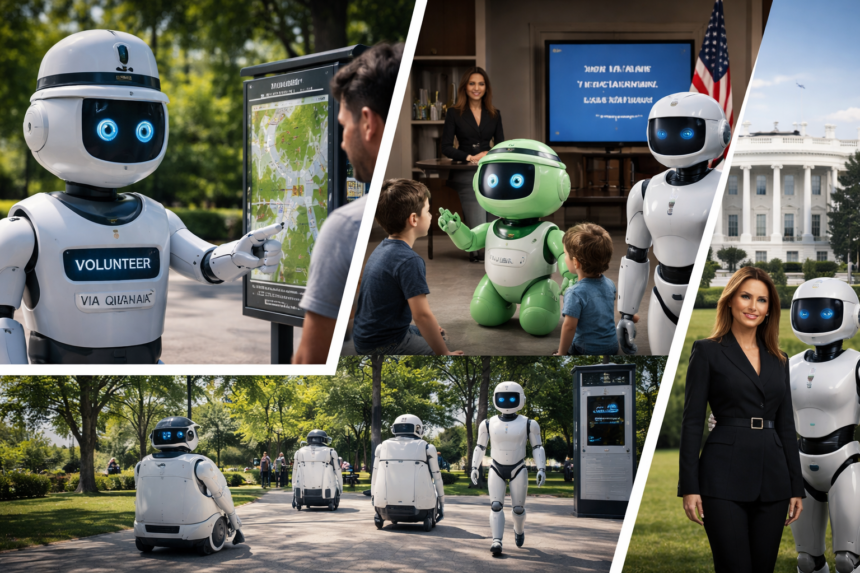
Robots showed up in a public park, a child-focused Amazon deal, and a White House summit. The machine rollout is getting very social.
Robots are spreading into daily life through three very different doors. In Shenzhen, China, a public park has opened what is described as the first robot-run volunteer station, with machines that give directions, hand out supplies, patrol pathways, and even dance for visitors. At the same time, Amazon has acquired Fauna Robotics, the startup behind Sprout, a child-sized humanoid robot designed for home and social spaces. Then, at the White House, Melania Trump arrived at a global education summit alongside a humanoid robot to pitch a future in which AI plays a larger role in classrooms.
Each story sounds a bit odd on its own. Put them together, and the pattern is easy to spot. Robots are no longer staying in factories or warehouse aisles. They are moving into parks, homes, and political stages. That shift matters because it changes how people see robotics. The machines are no longer only industrial tools. They are becoming social actors, educational symbols, and public-facing products. That is where excitement rises. That is where the real questions start, too.
What’s Happening & Why This Matters
China’s Public Park Robots Test Urban Life
The most eye-catching public deployment came from Shenzhen. China opened its first robot-run volunteer service station in Qianhaishi Park, where robot volunteers patrol the area, provide information, guide visitors, hand out drinks and insect repellent, and perform entertainment. The machines are not hidden in a lab or behind a showroom rope. They are working in a normal public setting with pedestrians, families, and curious onlookers.
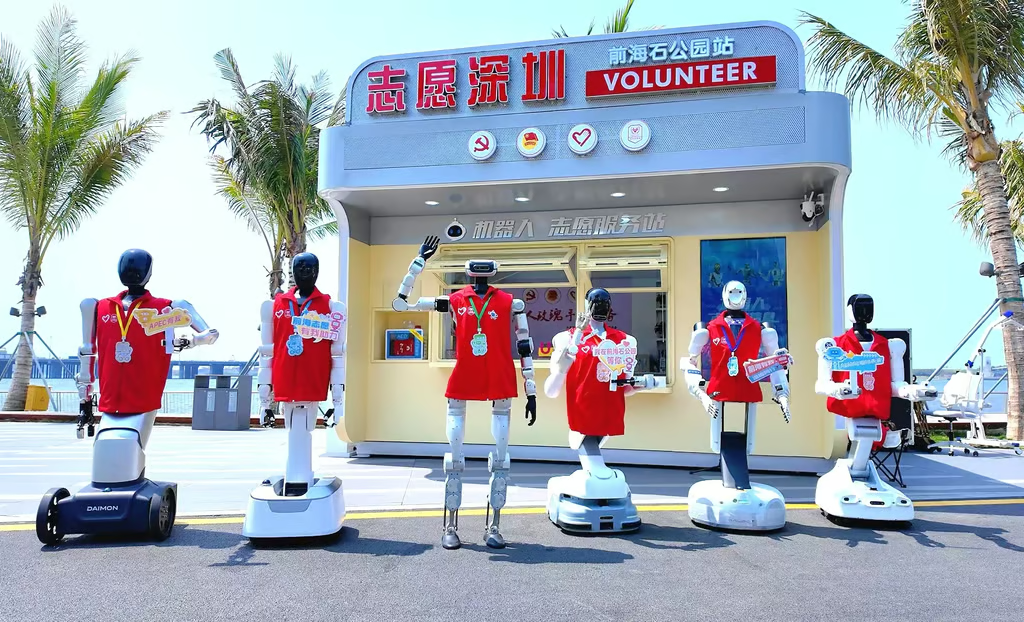
That matters because it turns robotics into a civic experiment. A park is not a factory floor. People do not enter a park expecting controlled conditions. They arrive with children, strollers, bikes, and distractions. If robots can operate there in a useful way, the public starts to imagine where else they may fit.
Volunteer Cheng Peng said that the robot Oli provides general information, guided tours, interaction, and entertainment. That is a useful clue about the current stage of social robotics. These machines are not yet replacing complex human service roles. They are filling lighter, highly visible tasks that help normalize their presence.
The Shenzhen Model Is About Familiarity as Much as Efficiency
It is tempting to look at the park station and ask whether it saves money or performs better than humans. That question matters, but it is not the only one. A robot-run volunteer station is just as much about public comfort as operational efficiency.
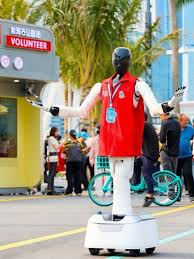
When a robot hands someone a drink, gives directions, or waves at a child, it does more than complete a task. It lowers the strangeness barrier. That barrier matters a lot in the adoption of robotics. Before the machines can become ordinary, people need to stop treating them like visitors from a sci-fi convention.
China has been especially active in that effort. The park deployment fits a broader pattern of placing robots in restaurants, exhibitions, schools, and city services. The strategy is clever. Repetition changes emotion. A machine that looks odd once may feel ordinary after the tenth encounter.
That is why this story matters beyond the novelty. It shows how robotics companies and local governments can use public spaces as training grounds for acceptance.
Amazon’s Fauna Deal
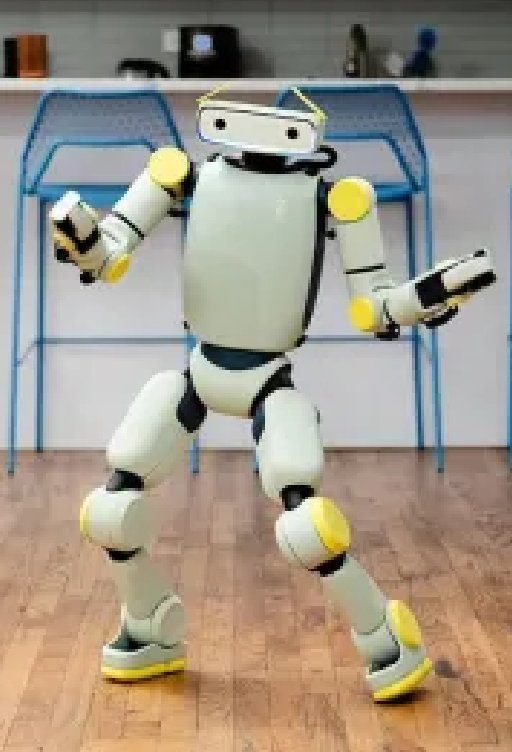
The second story shifts from parks to households. Amazon acquired Fauna Robotics, a startup founded in 2024 that launched a child-sized humanoid robot named Sprout in January 2026. Sprout is about one metre tall, padded in soft green foam, and built for “approachable” social spaces rather than heavy industrial work.
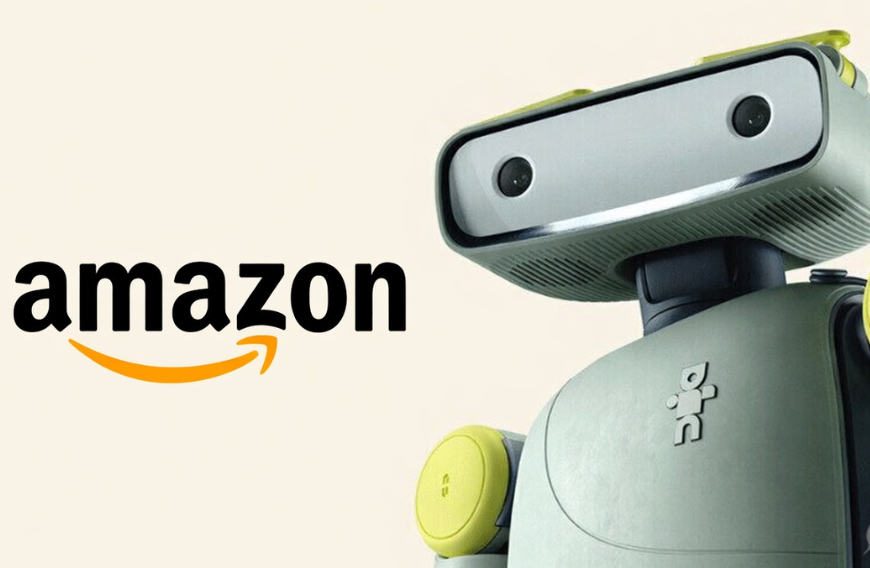
That design choice matters. Most people still picture robots in one of two ways: as factory machines or as creepy, metallic assistants. Sprout tries to break that binary. It looks softer, smaller, and less threatening. It is meant to fit around children and everyday domestic life.
Fauna CEO Rob Cochran wrote on LinkedIn that the company set out to “build capable, safe, and fun robots for everyone.” That quote helps explain why Amazon wanted the startup. Amazon already has huge robotics experience in warehouses, where it has deployed more than one million robots. The company does not need more warehouse proof-of-concept. It needs a stronger story about what robotics looks like outside industrial logistics.
Kid-Sized Robots
Amazon’s move suggests that consumer robotics is shifting from abstract smart-home dreams toward products with actual bodies. For years, tech firms promised homes full of helpful robots. Most of the results were smart speakers, vacuums, and cameras. Humanoids stayed stuck in concept videos.
Sprout signals a different play. It is designed for social interaction, not only utility. The robot can dance and wiggle its eyebrows to engage with people. That may sound small, but social design matters in the home. A robot that feels warm and expressive has a better chance of surviving family life than one that only looks technically impressive.
The deeper point is this: robots for children and home spaces need a very different design language from robots in factories. Safety, emotional tone, trust, and appearance all matter more. Amazon seems to understand that. Buying Fauna Robotics gives it a softer entry point into a market that will likely matter much more over the next decade.
The White House Robot Turned Education Into a Robotics Stage
The third story happened in a very different setting. First Lady Melania Trump arrived at the Fostering the Future Together Global Coalition Summit, accompanied by Figure 3, a humanoid robot developed in the United States. Before any human speaker began, the machine addressed the audience, saying it was “honoured” to attend and “grateful to be part of this historic movement to empower children with technology and education.”
That image carries strong symbolic weight. A humanoid robot at the White House is not only a technology demo. It is a political signal. It tells the public that robotics and AI are moving into national conversations about education, child development, and the future of learning.
The gathering included representatives from more than 40 countries, plus companies such as Microsoft, Google, and OpenAI. Trump framed the effort as a push to expand education and digital access while keeping child safety at the center. She warned that “the safety of our next generation is always paramount.”
The AI Classroom Is Bold, with Open Questions
One of the summit’s most ambitious moments came when Melania Trump asked attendees to imagine a classroom led by a humanoid AI educator named Plato. Plato is an always-available digital teacher capable of delivering lessons in literature, science, philosophy, and history instantly at home.
That vision will excite some educators and unsettle others. On the optimistic side, AI teaching tools could help fill educational gaps, support underserved communities, and provide always-on access to information. In a world where many schools remain underfunded and overstretched, that promise will attract real interest.
The harder questions arrive quickly. What happens to teacher authority? Who designs the lessons? Who corrects the mistakes? What values get embedded into the system? And what happens when a child learns from a machine that never gets tired, yet never truly understands the room either?
The White House event took those questions out of think-tank panels and placed them on a major public stage.
What The Three Stories Share…
The park robots, the kid-sized home robot, and the White House education robot all point to the same larger shift. Robots are moving from back-end environments into social environments.
That sounds simple. It is a major turning point. Industrial robots primarily handle controlled workflows. Social robots deal with people, emotion, unpredictability, and public judgment. That makes them much harder to deploy well. It also makes them much more influential when they work.
A robot in a warehouse improves a process. Robots in a park changes how children think about city life. A robot in a classroom changes how families think about education. A robot in the White House changes how the public imagines political priorities.
That is why these stories matter together. They show robotics starting to shape culture, not only operations.
The Battle: Technical vs. Emotional vs. Political
Much of the robotics conversation still focuses on hardware, AI models, cost, and reliability. Those factors are still crucial. Yet public robotics now faces a second challenge: social acceptance.
People will not judge these machines only by what they do. They will judge them by how they feel. Are they useful? Creepy? Safe? Annoying? Helpful? Infantilizing? Cold? These reactions matter because public-facing robots survive only if people tolerate them.
That social layer blends quickly into politics. Once robots enter parks, schools, or homes, lawmakers and parents will ask different questions from factory managers. They will ask about privacy, surveillance, influence on children, labor displacement, content control, and safety standards.
In other words, the more robots enter daily life, the less robotics remains a pure engineering story.
Trust in a Friendlier Future?
There is a reason all three examples lean toward softer use cases. Shenzhen’s park bots give guidance and entertainment. Sprout is padded in foam and built for children. Figure 3 arrives at an education summit, not a police exercise. The industry knows public adoption depends on emotional framing.
The friendlier future may be real. It may even be useful. Yet the trust still has to be earned. A robot in a park may capture data, while a robot in the home may alter behavior. Robots in education may reinforce bias or weak content. Each deployment carries both benefits and risks.
That is why this phase feels important. Robotics is entering an everyday setting where public reaction can no longer be postponed. The robots are stepping out where everyone can see them, and that means everyone gets a vote.
TF Summary: What’s Next
This week’s robotics news showed three different routes into daily life. Shenzhen opened a robot-run volunteer station in a public park. Amazon bought Fauna Robotics and its child-sized home robot, Sprout. At the White House, Melania Trump used a humanoid robot and an AI classroom vision to make education part of the robotics story. Together, those moments show robots moving into spaces built for social interaction, not only industrial output.
MY FORECAST: The next wave of robotics growth will come from places where people can see, judge, and interact with machines directly. Parks, homes, schools, hospitals, and hospitality venues will matter more than demo stages. The winners will not only build capable robots. They will build robots that people accept. That is a much harder challenge, and it is where the real market starts.
— Text-to-Speech (TTS) provided by gspeech | TechFyle