



Palantir keeps winning state work on both sides of the Atlantic. That says a lot about where government AI is headed.
Palantir has built a powerful position in government AI. New reporting from the UK and the US shows the company extending that reach again. In Britain, the Financial Conduct Authority gave Palantir a three-month trial to analyze highly sensitive internal intelligence data. In the US, the Pentagon is set to make Palantir’s Maven system an official program of record across the military. The two moves came from different agencies with different missions. They still point in the same direction.
Governments want AI that can digest huge data pools, spot patterns fast, and turn analysis into action. Palantir built its brand around that promise long before generative AI took over the headlines. That early focus is paying off. Yet each new contract brings the same hard questions. Who controls the data? Who audits the models? Where does efficiency end and overreach begin?
What’s Happening & Why This Matters
A Deepening Reach Into the British State
The UK story is not small. According to The Guardian, the FCA awarded Palantir a three-month contract worth more than £30,000 a week to test the use of its Foundry system on the regulator’s internal “data lake.” That data includes highly sensitive case intelligence, information on suspected and proven fraud, reports tied to money laundering and insider trading, and consumer complaint material.
The same report said the FCA’s data includes phone recordings, emails, and social media trawls. The goal is to help the regulator focus resources across roughly 42,000 financial services firms, from major banks to crypto exchanges. That is exactly the kind of work Palantir likes: high-stakes institutions, messy data, and pressure to find hidden patterns fast.
The FCA said Palantir will act only as a data processor, not a data controller. The watchdog added that it will keep exclusive control of encryption keys for the most sensitive files, host the data only in the UK, and require deletion after the contract ends. Even with those safeguards, critics inside and outside the FCA raised major privacy concerns.
Britain Sees Opportunity and Risk Simultaneously
The contract says a lot about the current mood in government AI. Agencies see AI as a force multiplier. They want better fraud detection, faster case triage, and smarter use of limited staff. In that sense, Palantir fits the moment. Professor Michael Levi of Cardiff University told The Guardian that data held by financial regulators is seriously underused and that AI can help tackle financial crime.
At the same time, the criticism is intense and specific. Christopher Houssemayne du Boulay, a partner at Hickman & Rose, warned that innocent people get swept into large enforcement data sets and that such data can hold bank details, emails, phone numbers, and other personal information. He said there are “very significant privacy concerns” if that information is ingested and used in an AI system.
That tension will follow Palantir everywhere. The company sells speed, integration, and insight. Public critics see a firm with deep ties to policing, defense, and intelligence that keeps moving closer to sensitive state functions. Both views carry truth. That is why Palantir sparks strong reactions in almost every public-sector market it enters.
The Pentagon Locks In Palantir Even More Deeply
If the FCA deal shows Palantir moving deeper into civilian regulation, the Pentagon story shows the company tightening its hold on military AI. Reuters reported that Deputy Secretary of Defense Steve Feinberg told Pentagon leaders that Palantir’s Maven artificial intelligence system will become an official program of record. That move would lock in long-term use of the technology across the US military.

Feinberg wrote that embedding Maven would give warfighters “the latest tools necessary to detect, deter, and dominate our adversaries in all domains.” Reuters said the decision is expected to take effect by the end of the current fiscal year in September. The memo shifts oversight of Maven to the Pentagon’s Chief Digital and Artificial Intelligence Office and assigns responsibility for future contracting with Palantir to the Army.
That matters because a program of record is not a casual pilot. It signals durability, funding continuity, and institutional adoption. In simple terms, Palantir is moving from a useful contractor to an infrastructure layer. Once software reaches that status inside a military bureaucracy, replacement gets much harder.
Maven Shows Why Palantir Keeps Winning Government AI Work
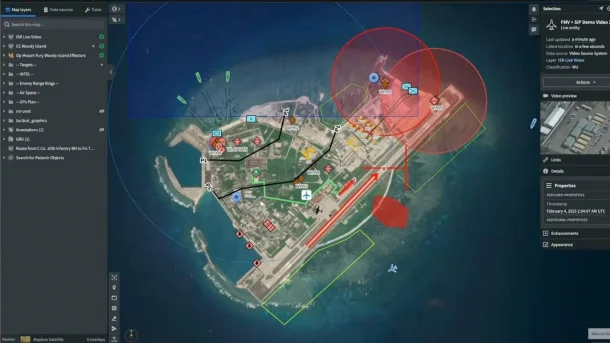
Palantir’s appeal is not mysterious. Maven analyzes huge volumes of battlefield data from satellites, drones, radars, sensors, and intelligence reports. Reuters said the platform can rapidly identify potential threats or targets such as vehicles, buildings, and weapons stockpiles. Pentagon official Cameron Stanley said tasks that once took hours can run far faster through the system.
That is the heart of Palantir’s government sales pitch. The company does not market AI as a chatbot party trick. It markets AI as an operational layer for high-pressure institutions. That is a big difference. Many AI firms promise better productivity. Palantir promises better state capacity.
That structure explains why governments keep calling. Regulators want to spot fraud sooner. Defense agencies want quicker analysis and tighter decision cycles. Health systems want cleaner data flows. Police forces want pattern detection. Palantir built tools for exactly those settings. The firm did not arrive late to the AI boom. It helped create the lane it is driving in.
The Company’s Government Flywheel Is Getting Stronger

The new moves add to a bigger trend. The Guardian reported that Palantir already holds more than £500 million in UK public deals, including contracts with the NHS, the military, and police forces. Reuters reported last year that the US Army awarded Palantir a deal worth up to $10 billion. In 2024, the Pentagon gave Maven a contract worth up to $480 million, and in May 2025, the ceiling rose to $1.3 billion.
This is how a public-sector flywheel works. One agency adopts a system. Another watches. A pilot turns into a procurement. A procurement turns into a standard. Once the software is embedded, reference customers do the selling. The next buyer sees less risk because another government has already signed first.
Palantir benefits from that cycle more than most AI companies. Its products are hard to explain in a thirty-second ad, but they are easy to justify inside a bureaucracy that needs results from ugly, fragmented, high-volume data. In government, boring systems that work often beat flashy tools that charm demos.
Human Rights, Privacy, and Accountability Will Not Fade
Palantir’s growth comes with a shadow. The Guardian noted criticism tied to the company’s work with the Israeli military and US immigration enforcement, along with wider objections from campaign groups and lawmakers. UK critics raised concerns not only about privacy, but about whether a private firm can learn too much about state methods and sensitive detection systems.
Reuters flagged a different concern about Maven. United Nations expert panels have warned that AI weapons that target without human intervention pose ethical, legal, and security risks. Those panels warn that AI can absorb bias from training data and pass those distortions into decisions. Palantir says its software does not make lethal decisions and that humans still select and approve targets.
That response matters, but it does not end the argument. The closer AI gets to enforcement, targeting, and surveillance, the more governments need clear audit trails, access controls, independent review, and strict limits on reuse. Without that discipline, efficiency gains can come with a democratic bill that arrives later and causes more harm.
Palantir’s Real Win Is Strategic Positioning
The biggest Palantir story is not one contract. It is in a strategic position. The company is one of the first names governments consider when they want AI for real-world operations, not just experimentation. That brand position is valuable. It puts Palantir in the room early when states plan new data, defense, fraud, border, or intelligence systems.
That matters in 2026 because governments are done with AI theater. They want deployed systems, measurable outputs, and cross-agency utility. Palantir fits that demand better than many newer AI firms that still lean on hype, demos, or narrow use cases. Its edge is not friendliness. Its edge is institutional seriousness.
The risk for governments is dependence. The more one vendor is the default answer for sensitive public tasks, the harder it gets to question architecture, pricing, portability, and long-term control. A great partner can still turn into a hard habit.
TF Summary: What’s Next
Palantir is strengthening its role as a preferred AI supplier for governments. In Britain, the FCA wants help mining vast internal intelligence data to fight fraud and financial crime. In the US, the Pentagon is preparing to formalize Maven as a core military system with long-term funding and wider adoption. Those decisions show where public-sector AI is moving: toward operational systems that handle serious data, serious risks, and serious power.
MY FORECAST: Palantir will keep winning state work because it solves hard institutional problems better than many rivals. Yet each win will fuel louder fights over privacy, accountability, human rights, and vendor dependence. Governments will not stop buying this kind of AI. They will face growing pressure to prove they still control it.
— Text-to-Speech (TTS) provided by gspeech | TechFyle