


The United States is launching a new effort to spread expertise in artificial intelligence worldwide. Through a new “Tech Corps” program housed inside the Peace Corps, Washington plans to send skilled volunteers overseas to help countries adopt modern AI tools responsibly and effectively. The initiative combines diplomacy, development, and technology into a single directive that is part humanitarian mission, part geopolitical chess.
At its core, the program aspires to deliver practical technical help where it matters most — in classrooms, hospitals, farms, and government agencies that lack deep engineering talent. It recalls growing concern that other nations are gaining influence through their own AI exports. The result is a new kind of soft power campaign, one powered not by food aid or infrastructure loans, but by algorithms and data science.
What’s Happening & Why This Matters
A New Kind Of Volunteer Mission
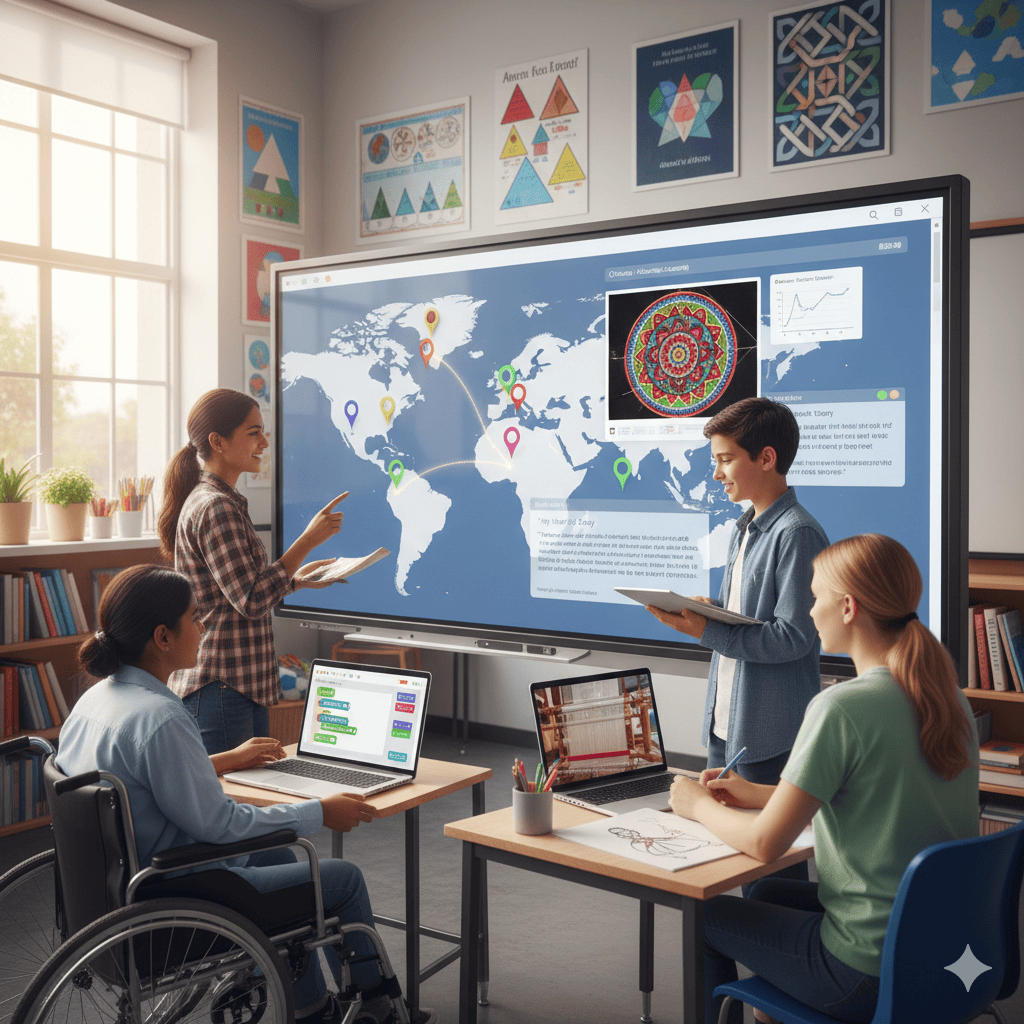
The Tech Corps operates as a specialised branch within the Peace Corps, which traditionally sends Americans abroad to support education, health, agriculture, and economic development projects. This new arm focuses on technical skills, especially artificial intelligence deployment and data infrastructure.
Officials describe the initiative as “last-mile support” — a term engineers use for the hardest part of any system rollout. Building software is one thing. Making it actually work in real-world conditions is another entirely. Volunteers will help local institutions integrate AI into daily operations rather than simply installing tools and walking away.
Possible assignments include helping teachers design AI-assisted lesson plans, working with health ministries to build predictive disease models, and refining agricultural datasets for crop optimisation. The emphasis stays on co-development, not technological hand-offs. In theory, host countries retain ownership and capability long after volunteers leave.
Service terms can last up to 27 months. Participants receive housing, healthcare, a stipend, and a completion award. Recruitment targets STEM graduates and professionals with experience in machine learning, software engineering, or data science.
The program signals a shift in how governments view development work. Instead of sending tractors or textbooks, they send people who can train neural networks.
Countering Global AI Influence
This initiative does not exist in a vacuum. It arrives amid intensifying competition over who shapes the digital infrastructure of the future. Analysts warn that emerging economies often adopt whichever technology arrives first and cheapest, creating long-term dependencies.
Recent reports indicate that Chinese AI systems are gaining traction across parts of the developing world. That trend alarms policymakers who worry about standards, data governance, and geopolitical alignment. By offering expertise rather than products alone, the United States hopes to influence how AI ecosystems take root.
The Tech Corps connects closely to a broader effort sometimes described as exporting the “full technology stack.” That includes hardware, software platforms, data systems, cybersecurity practices, and governance frameworks. In practical terms, it means helping partner nations build compatible digital infrastructure from the ground up.
The initiative also links to programs encouraging allied nations to coordinate supply chains for AI components. Agreements involving multiple countries seek to stabilise access to critical materials and chips while setting shared security norms.
Critics argue this approach risks turning humanitarian programs into instruments of strategic competition. Supporters counter that technological leadership carries real consequences for economic growth, privacy protections, and democratic governance.
Both sides are probably right. Technology rarely travels alone; it brings its assumptions with it.
Education, Health, And Agriculture
Beyond geopolitics, the program’s day-to-day effects could be substantial. Many countries struggle not with access to technology itself but with the skills needed to implement it safely and effectively. AI systems require curated data, domain knowledge, and ongoing maintenance — all scarce resources in underserved regions.
In education, volunteers might help schools personalise learning or automate administrative tasks. In healthcare, AI could assist with diagnostics, patient triage, or outbreak prediction. In agriculture, data models can optimise irrigation, fertiliser use, and crop selection.
These applications are not futuristic fantasies. They already exist in advanced economies. The gap lies in deployment capacity, not imagination.
By embedding specialists on site, the program attempts to close that gap. It also builds relationships between institutions, which often matter more than technology itself. Trust determines whether tools get used or abandoned.
The White House announcement frames the mission as mutually beneficial. Volunteers gain international experience and cross-cultural insight. Host countries gain technical capacity. Meanwhile, the sponsoring nation strengthens diplomatic ties without formal treaties or military presence.
As one official summary notes, volunteers will work “directly with local institutions” to co-develop solutions tailored to local needs rather than importing one-size-fits-all systems.
Questions About Adoption And Participation
Despite the ambitious vision, participation remains uncertain. No country has publicly confirmed its participation in the broader AI export framework tied to the program. Some governments may hesitate to commit due to political sensitivities, data sovereignty concerns, or fear of becoming technologically dependent.
There is also the practical question of readiness. AI projects require stable internet connectivity, reliable electricity, and robust regulatory structures. In regions where those basics remain fragile, even the best algorithms struggle to deliver value.
Another challenge involves ethics and accountability. AI systems can reinforce bias, compromise privacy, or create unintended social consequences. Volunteers must navigate cultural contexts carefully to avoid imposing external norms or triggering backlash.
Still, the Peace Corps’ long history of grassroots engagement provides a foundation of credibility. Unlike many government initiatives, it notes collaboration and community involvement rather than top-down directives.
A Digital Age Soft Power Strategy
Viewed through a wider lens, the Tech Corps represents an evolution in diplomacy itself. Traditional soft power relied on cultural exchange, education programs, or development aid. In the twenty-first century, influence increasingly flows through digital ecosystems.
Who trains your engineers? Who sets your technical standards? Who maintains your data centres? Those relationships shape policy choices for decades.
By investing in human connections rather than hardware alone, the program bets that knowledge transfer creates deeper ties than equipment donations. A server can be replaced. A trained workforce cannot be outsourced overnight.
This approach also acknowledges a fundamental truth: artificial intelligence is not merely a product. It is a capability. And capabilities diffuse through people.
TF Summary: What’s Next
The Tech Corps initiative marks a major shift in how nations compete and cooperate in the AI era. Instead of focusing solely on domestic innovation, policymakers now recognise that global adoption patterns will shape the future balance of power. If successful, the program could accelerate digital development while strengthening diplomatic relationships across multiple regions.
MY FORECAST: However, the outcome depends on participation, infrastructure readiness, and trust. Countries must see the initiative as a partnership rather than pressure. Volunteers must deliver real value on the ground. If those conditions hold, Tech Corps deployments could begin reshaping how technology spreads worldwide — not as exports of machines, but as exchanges of knowledge.
— Text-to-Speech (TTS) provided by gspeech | TechFyle