


The Catholic Church hopes more people understand, but are sacred spaces still sacred when mediated through software?
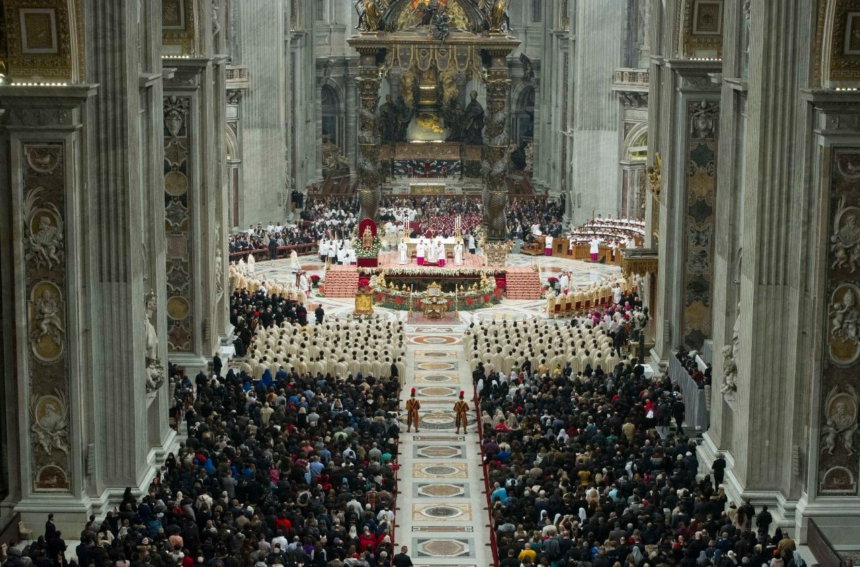
The Vatican strode into the algorithmic age with an unexpected tool: real-time artificial intelligence translation during Mass. In a place where Latin once ruled, and whispers resonated across centuries of stone, smartphones glowed quietly in the pews. The Catholic Church introduced AI-assisted live translation to help pilgrims, from every continent, follow services as they occurred.
The choice pits ancient versus futuristic. For centuries, the Church built unity through ritual. Today, it uses machine learning to build unity through comprehension. The system debuted during major celebrations marking the 400th anniversary of St. Peter’s Basilica’s dedication. Can tradition and technology share the same altar without combusting?
What’s Happening & Why This Matters
AI Brings Real-Time Understanding to Worship
The Vatican deploys an AI translation service that delivers live audio and text in roughly 60 languages. Worshippers scan a QR code at the basilica entrance. Their phones open a browser-based interface. No app download required. No complicated setup. Just instant linguistic teleportation.
The system runs on Lara, an AI platform built by language technology firm Translated in collaboration with Carnegie‑AI LLC and speech translation pioneer Alexander Waibel. It listens, processes, translates, and streams output in near real time.
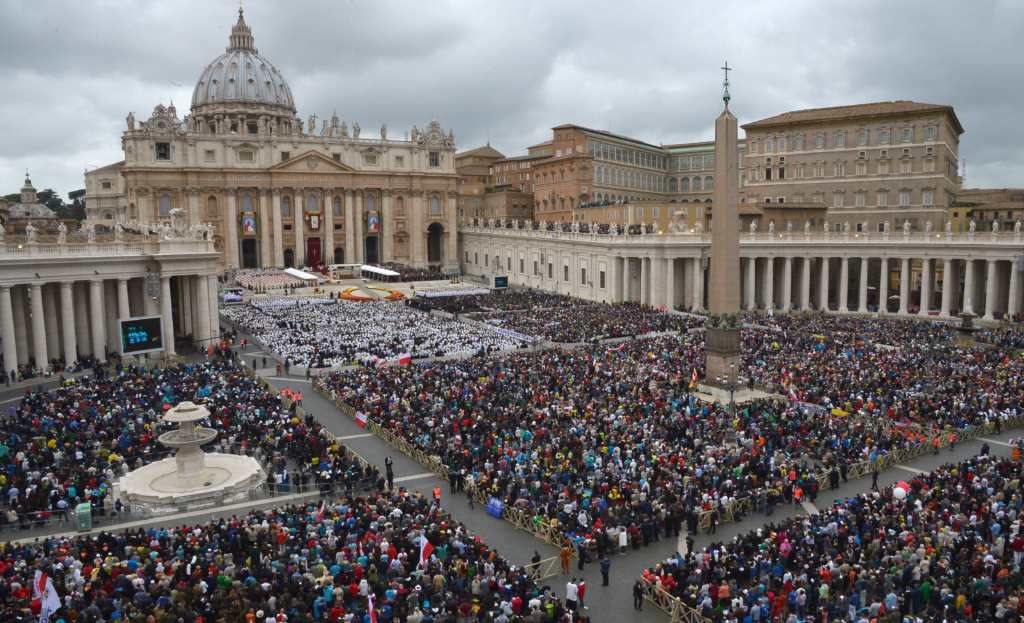
According to officials, the intent is pastoral rather than technological showmanship. Cardinal Mauro Gambetti explains that St. Peter’s has “for centuries welcomed the faithful from every nation and tongue,” and the new tool continues that mission in modern form.
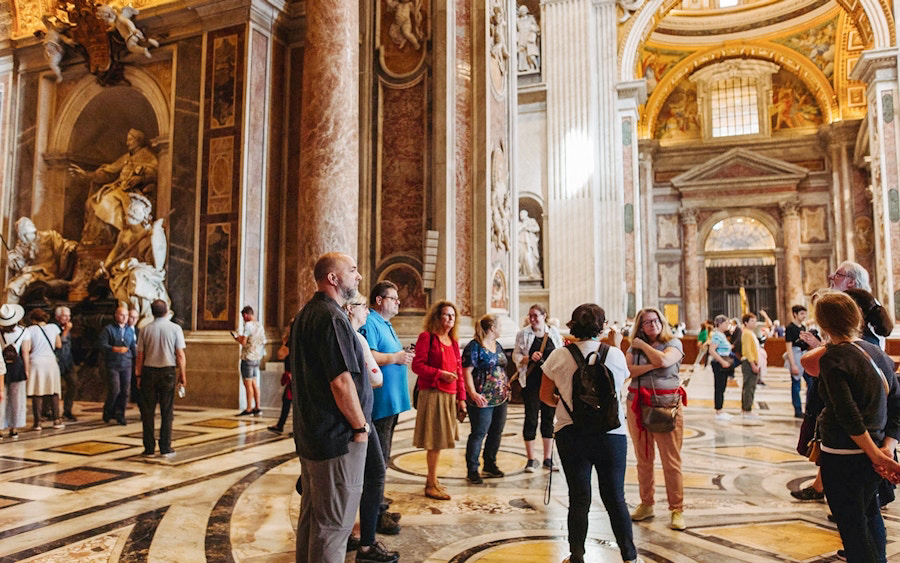
In practical terms, the application transforms the experience for international visitors. Pilgrims no longer rely on printed guides or guesswork. They hear the liturgy in their own language as it unfolds, turning a spectacle into participation.
Accuracy Versus AI Hallucination Fears
Whenever AI touches something sacred, people ask the same nervous question: What if the machine invents things?
Developers claim the system prioritises accuracy over conversational flair. The creators state that the model uses a greater context than older translation tools, which reduces ambiguity and the dreaded “hallucination” problem.
Even so, perfection remains mythical. Translation is interpretation, not duplication. Subtle theological nuance can shift meaning dramatically. A misplaced verb tense might turn a blessing into a command or soften doctrine into a suggestion. Humans argue about translations of scripture written two millennia ago. Expecting flawless machine rendering in real time borders on optimistic science fiction.
Still, incremental improvement matters. Each generation of speech translation models narrows the gap between hearing words and understanding intent. For global gatherings, that gap defines whether participants feel included or merely present.
A Symbolic Moment for AI Adoption
The rollout carries symbolic weight beyond its technological significance. The Catholic Church historically moves slowly on innovation, favouring continuity over novelty. When it adopts a tool, it signals legitimacy to millions of followers worldwide.
Scientific advisor Alexander Waibel describes the project as a demonstration of AI’s ability to “break language barriers in real time.” In a religious context, that statement echoes the biblical story of Pentecost, where followers suddenly speak and understand many languages. Engineers accidentally recreate a myth with silicon.
Yet the Vatican maintains a cautious stance. Pope Leo XIV warned earlier that artificial intelligence poses risks to human dignity, justice, and labour. In other words, the Church blesses the tool while side-eyeing the toolbox.
The dual posture mirrors society at large. AI promises connection while threatening disruption. It offers clarity while raising concerns about control, surveillance, and dependence.
Technology Meets Tradition Without Replacing It
Crucially, the system supplements the service rather than replacing human roles. Priests still speak. Choirs still sing. Rituals remain unchanged. AI acts as an invisible interpreter rather than a participant.
That distinction matters psychologically. People resist machines that intrude into sacred acts but tolerate ones that operate quietly in the background. The translation tool functions like modern lighting or microphones — enhancing perception without altering meaning.
There is also a practical accessibility dimension. Hearing-impaired attendees can follow the text. Visitors unfamiliar with Latin or Italian gain comprehension. Even longtime worshippers may notice nuances previously lost.
From a sociological perspective, this may strengthen communal bonds rather than weaken them. Understanding fosters engagement. Engagement fosters belonging. Belonging sustains institutions.
Implications Beyond the Vatican Walls
Once successfully deployed, the model can be applied conceptually to other domains. Large conferences, international diplomacy, education, tourism, and disaster response all benefit from frictionless communication.
Imagine refugee processing centres where officials and displaced families instantly understand each other. Picture multinational scientific collaborations where language no longer slows discovery. Consider remote medical consultations across continents without interpreters.
Religious settings provide a dramatic stage for the transformation already underway.
Yet there are caveats. Language carries culture. Automated translation risks flattening nuance into generic phrasing. Humour, idioms, and emotional tone rarely survive intact. In sacred contexts, these subtleties matter enormously.
Technology can bridge communication gaps. It cannot replicate shared history.
TF Summary: What’s Next
The Vatican’s AI translation initiative marks a fascinating convergence of antiquity and innovation. It shows that even institutions rooted in millennia of tradition recognise the practical benefits of artificial intelligence when used carefully. If the rollout proceeds smoothly, similar systems will likely appear across major religious events worldwide, from pilgrimages to global conferences.
MY FORECAST: On a grander scale, the experiment hints at a future in which language barriers shrink immensely. Real-time translation may soon feel as mundane as Wi-Fi. The deeper question is not whether machines can translate words, but whether they can preserve meaning, context, and humanity while doing so. The Church, perhaps unexpectedly, becomes a testing ground for that question.