



When Synthetic Cinema Is Nearly Indistinguishable From Reality
Artificial intelligence just crossed another uncanny threshold. A new video generator from ByteDance, the parent company of TikTok, can produce movie-quality scenes from a few lines of text. No cameras or studio lots. No actors. Simple prompts and processing power. The tool, called Seedance 2.0, ignites excitement among hobbyists and dread across Hollywood, where livelihoods depend on human creativity, performance, and intellectual property.
Clips created with the system spread rapidly online. They show famous actors fighting monsters, beloved characters recast in surreal scenarios, and scenes that look ripped from blockbuster films that never existed. Many viewers struggle to tell that they are synthetic. That is exactly the problem. As realism increases, the boundary between imagination and reality dissolves, raising urgent questions about copyright, employment, misinformation, and cultural authenticity.
Entertainment history repeatedly demonstrates that new technology reshapes industries. Sound killed silent films. Television reshaped cinema. Streaming disrupted the broadcast. Instead of changing distribution, AI can replace production itself. When one person with a laptop can simulate an entire studio pipeline, the economic foundations of entertainment begin to wobble.
What’s Happening & Why This Matters
Hollywood Sees Copyright Alarm Bells
Major film studios respond with immediate legal concern. The Motion Picture Association warns that Seedance produces clips that rely heavily on existing films, actors, and intellectual property without permission. According to the organisation, the tool engages in “unauthorised use of US copyrighted works on a massive scale.”
The association represents leaders including Netflix, Paramount Pictures, Amazon MGM Studios, Sony Pictures, Universal Pictures, The Walt Disney Company, and Warner Bros. Discovery. The companies rely on licensing, box office revenue, and subscription models built on exclusive content. If AI tools can reproduce their characters and visual styles freely, the concept of exclusivity erodes.
Examples circulating online include synthetic scenes featuring well-known actors and recognisable franchises. Fans generate mashups, parodies, and entirely new narratives starring digital versions of real performers. Some clips look so polished that they rival professional productions. The studios argue that such output undermines legal protections that support millions of jobs in the creative economy.
ByteDance Promises Safeguards

Facing backlash, ByteDance states that it takes intellectual property seriously and is implementing new safeguards. The company suspends certain features, including the ability to upload images of real people during testing phases. It also promises monitoring systems to reduce misuse.
Executives describe the controversial content as part of limited pre-launch experimentation rather than official deployment. They emphasise that policies will evolve as the technology matures.
Still, critics are sceptical. Once generative tools exist, restrictions can be bypassed through workarounds, open-source copies, or competing platforms. Technology spreads faster than governance. The genie rarely returns to the bottle.
Disney Fires A Legal Warning Shot
The situation escalates when The Walt Disney Company reportedly sends a cease-and-desist letter accusing Seedance of training on a “pirated library” of characters, including from Marvel and Star Wars. Lawyers describe the alleged action as a “virtual smash-and-grab” of intellectual property.
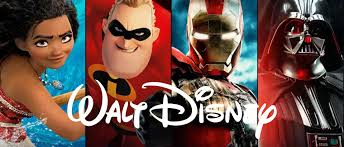
The language shows that studios view the issue not merely as innovation but as potential theft. Copyright law historically protects creative works from unauthorised reproduction. AI training complicates the matter because systems learn from vast datasets that often include copyrighted material scraped from the internet.
Creative unions echo these concerns. The actors’ organisation SAG-AFTRA labels the technology “blatant infringement,” arguing that digital replicas threaten performers’ livelihoods and identity rights. Writers and artists demand compensation frameworks and licensing agreements.
Artists Fear An Existential Disruption
Some creators respond with stark warnings. Rhett Reese, co-writer of major blockbuster films, says watching high-quality AI-generated clips feels like witnessing the collapse of an industry. He notes that a single talented individual could soon produce films indistinguishable from studio releases.
That possibility unsettles professionals across filmmaking disciplines. Actors, cinematographers, editors, set designers, costume artists, and visual effects teams all depend on collaborative production pipelines. AI threatens to compress roles into software functions.

Yet not everyone predicts total replacement. Comedy writer Heather Anne Campbell points out that many AI outputs resemble fan fiction. She argues that generating visuals does not automatically produce compelling storytelling. Original ideas are scarce and valuable.
In other words, technology can imitate craft, but imagination still matters. Whether audiences continue valuing human creativity over synthetic content is an open question.
Why Ultra-Real Video Changes Everything
Earlier AI tools produced obvious artefacts. Faces warped. Motion jittered. Lighting looked artificial. Seedance’s realism erases many of the tells. The system can mimic camera movements, cinematic lighting, and actor-like performances.
This is a scary development beyond entertainment. Ultra-realistic video enables persuasive misinformation, fabricated evidence, and social engineering attacks. A fake clip of a political leader or corporate executive could influence markets or public opinion before verification catches up.
Security experts worry about a future where visual evidence no longer guarantees truth. Journalism, law enforcement, and courts rely heavily on video as proof. If synthetic footage is nearly indistinguishable from reality, institutions must develop new verification mechanisms.
The Economics Of Infinite Content
AI video generation also transforms supply dynamics. Traditional filmmaking is expensive because it requires labour, equipment, and time. Generative systems dramatically reduce marginal costs. Once trained, the software can produce endless content cheaply.

An abundance could flood platforms with material, making discovery harder and devaluing individual works. Streaming services already struggle with oversupply. AI accelerates the trend.
On the positive side, democratisation allows independent creators to produce ambitious projects without massive budgets. Educational videos, simulations, and niche storytelling could flourish. The same tool that disrupts Hollywood might empower a new generation of storytellers.
Technology rarely produces purely negative or purely positive outcomes. It redistributes power.
Regulatory Pressure Builds
Governments worldwide are beginning to examine how to regulate generative media. Issues include copyright, consent for digital likeness, deepfake prevention, and transparency requirements. Some jurisdictions consider watermarking AI-generated content or mandating disclosure labels.
However, enforcement is challenging. Software can run locally or across borders. Open-source alternatives proliferate quickly. Global coordination would be ideal but difficult.
The entertainment industry explores licensing agreements as a pragmatic solution. If AI companies pay to use characters, scripts, or performances, both sides could benefit. Similar arrangements already exist in music sampling and stock footage.
TF Summary: What’s Next
Seedance demonstrates how quickly artificial intelligence can leap from novelty to disruption. What once required massive studios and crews now fits inside software accessible to millions. Hollywood’s fierce reaction reflects not resistance to progress but fear of uncontrolled transformation. Intellectual property, employment, and cultural identity all sit on the line.
MY FORECAST: Expect a wave of lawsuits, licensing deals, and regulatory proposals. The entertainment industry will not surrender quietly, and technology firms will not slow innovation voluntarily. The likely outcome is a negotiated middle ground where AI tools operate within defined legal boundaries while still enabling new forms of creativity. Until then, viewers must navigate a world where seeing is no longer believing.
— Text-to-Speech (TTS) provided by gspeech | TechFyle