


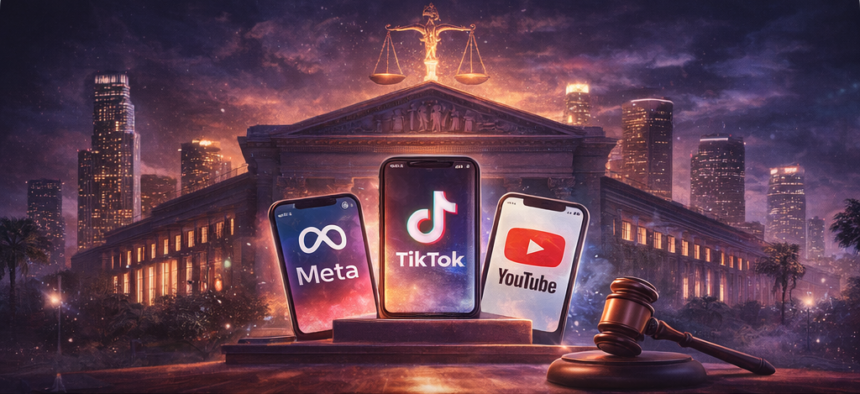
Inside the landmark youth addiction case putting Meta and YouTube under legal fire.
Social media spent years sitting comfortably at the centre of modern life. Teens scroll. Parents worry. Lawmakers debate. Platforms promise safety tools.
Now, that entire ecosystem enters a courtroom in Los Angeles.
This week, one of the most closely watched legal battles in tech begins. Plaintiffs argue that social media addiction harms young users through design, algorithms, and engagement tricks. Defendants insist they build entertainment, not dependency.
Either way, the case forces a blunt question: when apps shape childhood behaviour, who carries responsibility?
What’s Happening & Why This Matters
A Landmark Trial Targets Big Social Platforms
Los Angeles hosts a major trial against some of the world’s most powerful tech companies: Meta (owner of Instagram and Facebook), TikTok, and YouTube. (TikTok settled before the trial started.)
The lawsuit is brought by a teenage plaintiff, identified only as “K.G.M.” Her legal team argues that these platforms deliberately design features that draw young users into compulsive use.
The complaint focuses on mechanics that feel familiar to anyone who has ever opened an app “for five minutes” and looked up an hour later:
- endless feeds
- autoplay video
- algorithmic recommendations
- push notifications
- streaks, likes, and engagement rewards
As legal scholar Clay Calvert describes it, this case resembles “the tobacco trials of our generation.” That comparison sticks because it frames social media not as harmless entertainment, but as an engineered product with measurable mental health consequences.
Centre Stage: Youth Mental Health
This case lands at a moment when youth mental health already dominates public debate.
Over the past decade, researchers, pediatric groups, and school systems report rising anxiety, depression, and self-harm concerns among teens. Parents connect those trends to smartphones.

Platforms respond with safety updates, yet critics argue those changes arrive slowly, often after scandals or regulatory threats.
The lawsuit claims that companies understand exactly how engagement systems affect developing brains. The plaintiff argues the platforms prioritise growth over wellness.
That allegation cuts deep because it challenges the tech industry’s favourite defence: “We just provide tools.”
This trial insists the tools come with intent.
Meta and YouTube Defend Their Products
The companies reject the accusation that they “addict” teens.
Meta points to features such as:
- teen account protections
- parental supervision tools
- limits on late-night notifications
- restricted content controls
YouTube employs similar arguments. They describe themselves as entertainment platforms that also invest heavily in safety teams and moderation systems.
But plaintiffs argue these tools act like seatbelts installed after years of speeding.
The core legal question stays simple: Do these platforms merely host content, or do they actively shape behaviour through design?
Algorithm: The Real Defendant
The courtroom drama extends beyond social media branding. The real subject lies within the code: the recommendation algorithm.
These systems decide what teens see next. They predict what holds attention. They optimise for watch time, clicks, and emotional engagement.
Critics argue that optimisation creates feedback loops:
- Sadness pulls more sadness
- Insecurity pulls more insecurity
- outrage pulls more outrage
The trial forces a rare moment of transparency. Lawyers want internal research, design documents, and executive testimony.
That kind of scrutiny scares Silicon Valley more than any headline.
A Ripple Effect Across the Entire Industry
The case does not stop at Meta or YouTube. If a jury rules against these platforms, the decision influences:
- future lawsuits nationwide
- regulatory pressure in Washington and Brussels
- platform design standards
- youth access restrictions
- advertising models tied to teen engagement
The trial also strengthens momentum behind laws like California’s youth safety proposals and global frameworks such as the EU Digital Services Act.
In short, Los Angeles is the proving ground for whether society treats social media as neutral speech platforms or regulated consumer products.
Teens, Parents, and Schools Are Watching
For families, this case feels personal.
Parents already fight battles over screen time. Schools manage classroom distraction. Teens live inside digital spaces that adults barely understand.
The lawsuit turns those private struggles into a public legal confrontation.
Even if the companies win, the trial itself signals something important: the era of “move fast and apologise later” ends.
TF Summary: What’s Next
The Los Angeles social media trial places Meta and YouTube under intense legal pressure over claims of youth addiction and mental health harm. The case challenges the business logic of engagement-first design and forces the industry to defend algorithms in public.
MY FORECAST: The trial foreshadows a future in which teen social platforms operate under stricter rules, heavier oversight, and fewer dark-pattern engagement tricks. Social media companies face the same arc as tobacco, gambling, and opioids. If public trust erodes, regulation rises, and courtroom accountability is inevitable.
— Text-to-Speech (TTS) provided by gspeech | TechFyle