



The Davos Meeting Includes Political, Business, and Academic Leaders
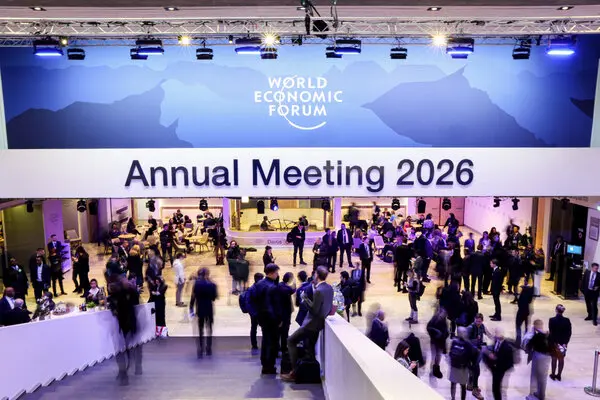
Technology often dominates conversations at Davos [2026], and artificial intelligence is at the centre of it all. In previous years, AI felt abstract, experimental, and theoretical. This year, it felt operational. Leaders spoke less about hype and more about pressure, trade-offs, and consequences. The tone shifted. Executives, researchers, and policymakers no longer debate whether AI matters. They debate how it already reorients work, power, and trust.
Discussions moved past shiny demos. Speakers addressed uneven access, fragile infrastructure, and the growing gap between promise and payoff. AI no longer lived inside labs or keynote slides. It sat inside factories, codebases, hiring decisions, and national strategies. Davos became a checkpoint, not a launchpad.
What’s Happening & Why This Matters
AI: From Novelty to Necessity
At Davos, AI no longer appeared as an optional innovation. It appeared as table stakes. Satya Nadella, CEO of Microsoft, articulated the moment clearly. AI only matters when it changes outcomes. He stressed usefulness over spectacle, urging companies and governments to deploy AI to deliver tangible benefits for people, industries, and economies.
Nadella also raised a hard truth. Access defines outcomes. Capital, compute, energy, and connectivity decide who benefits. AI deployment spreads unevenly because infrastructure spreads unevenly. Data centres require power. Models require chips. Networks require state-level coordination. Without grids and broadband, AI talk collapses into theory. Davos audiences heard a reminder: technological progress is built on physical foundations.
This viewpoint influences AI leadership. Innovation is not solely owned by software teams. It is impacted — directly and indirectly — by policy, utilities, and long-term planning.
The Human Illusion Problem
Another theme surfaced repeatedly: human likeness. Yoshua Bengio, one of AI’s most influential researchers, warned that modern systems invite false assumptions. People treat AI as human because it sounds human. The risk increases as systems improve. Users project intent, emotion, and judgment where none exist.
Bengio pushed back against anthropomorphism. AI does not share human values, instincts, or accountability. Treating it as such creates dangerous shortcuts. He argued that society evolved norms to handle human behaviour, not synthetic cognition. That mismatch creates blind spots in trust, regulation, and responsibility.
The concern resonated strongly at Davos because AI already mediates conversations, decisions, and advice. When people confuse fluency with understanding, errors scale, almost exponentially.
Intelligence Without Wisdom
Philosopher Yuval Noah Harari added another layer. He rejected the idea that intelligence guarantees clarity. Highly intelligent systems can still behave irrationally or destructively. History offers plenty of human examples. AI changes the scale, not the pattern.
Harari emphasised humility. Humanity lacks experience in building a shared society with non-human intelligence. He called for correction mechanisms and institutional restraint. Speed without reflection increases systemic risk. At Davos, this perspective cut through techno-optimism. Progress without governance creates fragile systems, not resilient ones.
Geopolitics and the Chip Question
AI at Davos did not stay neutral. Dario Amodei tied AI capability directly to geopolitics. He argued that controlling advanced chip distribution buys time. Time allows regulation, safety research, and coordination. He framed chip exports as leverage, not commerce.
Amodei warned that selling advanced AI chips to geopolitical rivals compresses the margin for error. Once capabilities equalise, governance loses influence. His comments reflected a broader Davos tension. AI leadership overlaps with national security. Technology policy and foreign policy blend into one conversation.
AI strategy includes export controls, alliances, and defensive planning. Davos showcased the convergence openly.
Work, Jobs, and Reality Checks
The future of work surfaced repeatedly, often with less certainty than headlines suggest. Amodei acknowledged disruption, especially in coding and entry-level roles. He described early signals, not collapse. The narrative felt cautious rather than alarmist.
In contrast, Demis Hassabis offered a more optimistic view. He predicted new roles and more meaningful work. He encouraged younger workers to master AI tools rather than chase traditional internships. Tool fluency now accelerates careers faster than legacy pathways.
Yet even optimism carried warnings. Hassabis described the post-AGI job market as unknown territory. He raised questions about purpose, identity, and societal structure. Davos discussions made one point clear. AI changes work patterns before it changes job counts. Adaptation begins long before displacement.
The CEO Reality Gap
Away from panels, data painted a sobering picture. A global PwC CEO survey showed limited financial returns from AI so far. Less than a third of executives reported revenue growth. Cost savings appeared inconsistent. Many companies adopted AI to remain relevant, not profitable.
Over half of surveyed CEOs saw no material benefit. Despite heavy investment, results lagged expectations. Yet adoption continued. Why? Because relevance matters. Falling behind feels riskier than overspending. Davos captured this contradiction perfectly. AI feels mandatory even when returns remain unclear.
This dynamic explains much of the current AI rush. Fear of irrelevance drives decisions more than proven outcomes.
TF Summary: What’s Next
Technology’s presence at Davos signals a turning point. AI no longer occupies speculative space. It occupies strategic space. Leaders focus on infrastructure, trust, governance, and power. Conversations now revolve around constraints as much as capability. That shift feels healthy.
The next phase centres on execution. Companies test value. Governments test frameworks. Workers test adaptability. Davos shows alignment on importance but fragmentation on approach. Coordination becomes the challenge, not invention.
MY FORECAST: AI discourse at future Davos gatherings pivots further away from possibility and deeper into consequence. Expect poignant debates around control, labour structure, and geopolitical leverage. The age of asking what AI can do ends. The age of deciding what AI must not do begins.
— Text-to-Speech (TTS) provided by gspeech