


Personalisation with AI Is The Next Frontier
Personalised AI stops feeling abstract. It now feels personal. Google rolls out a new Gemini capability that lets the chatbot tailor answers using a user’s own data. Gmail. Photos. Search history. YouTube activity. The idea sounds simple. The implications run deep.
This update reframes how people interact with AI assistants. Gemini no longer responds only to prompts. It responds to context. That context already lives inside Google’s ecosystem. Users choose whether Gemini sees it. Once enabled, the assistant connects dots faster than any manual search ever could.
What’s Happening & Why This Matters
Gemini Using Personal Context
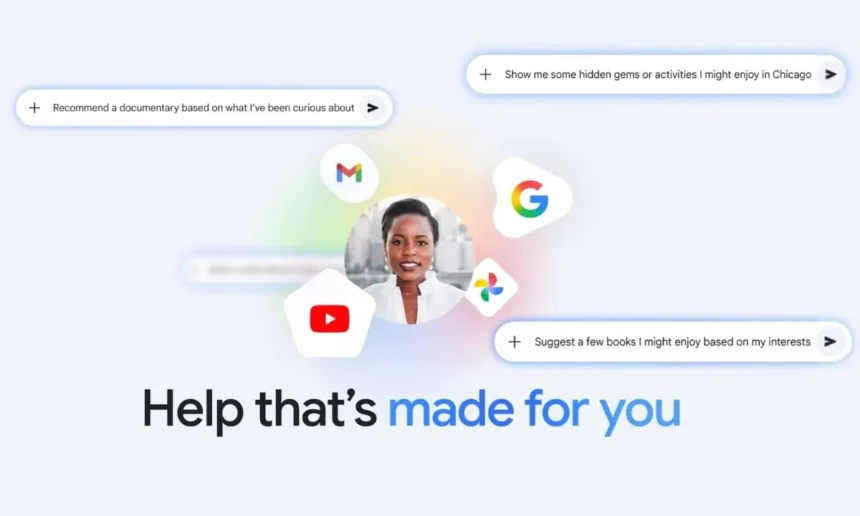
Google is testing a feature it calls Personal Intelligence inside Gemini. Users opt in. They select which Google apps Gemini can access. The list includes Gmail, Google Photos, Search, and YouTube.
Once connected, Gemini answers questions using signals from that data. A generic question suddenly turns specific. Ask about travel plans. Gemini reviews past trips and preferences. Ask about buying car tyres. Gemini checks emails and photos to identify the car model and usage patterns. Google’s VP of Gemini, Josh Woodward, describes the experience as “removing friction from everyday decisions.”
Why Now, Google?
AI assistants compete on usefulness. Raw intelligence no longer differentiates. Context does. Google already stores user data. Gemini simply interprets it in real time. No exporting. No third-party handoffs.
Google stresses that this data remains inside its systems. The company states that Gemini does not directly train on personal emails or photos. Instead, it uses anonymised prompts and responses after removing identifying details. Google positions this move as safer than sending personal data to external AI services.
Privacy Guardrails on Centre Stage
Personalisation triggers concern. Google leans into reassurance. Personal Intelligence stays off by default. Users enable it manually. Gemini avoids sensitive topics such as health unless users explicitly request that information.
Google emphasises one core point. The data already exists inside Google. Gemini does not pull new data into new places. That framing is important. Trust defines adoption, and Google knows it.
A Subtle Shot Across The Bow
The feature also resets competitive pressure. Apple promises a similar cross-app context for Siri. That feature misses its 2024 window. Leadership changes follow. Lawsuits stack up.
Google steps into the gap. It even partners with Apple to bring Gemini into Siri’s backend. When Siri gains true context awareness, Gemini technology may power it. That reality moulds the AI assistant market.
TF Summary: What’s Next
Gemini’s personalisation marks a turning point. AI shifts from answering questions to anticipating needs. The assistant feels less like software and more like an informed collaborator. Users gain speed. Google gains stickiness.
MY FORECAST: Personal Intelligence becomes table stakes for AI assistants. Opt-in context defines trust. Companies that fail to personalise without crossing privacy lines lose relevance fast.
— Text-to-Speech (TTS) provided by gspeech