



When Iran’s streets filled with protesters and the government pulled the digital plug, one network still flickered to life. Starlink, the satellite internet service run by SpaceX, quietly became a lifeline. Reports confirm that Starlink access in Iran shifted to free service, even as authorities jam signals and seize dishes in an effort to silence dissent.
This moment blends geopolitics, technology, and civil resistance. It also shows how satellite internet access now shapes modern protest movements as much as banners and chants.
What’s Happening & Why This Matters

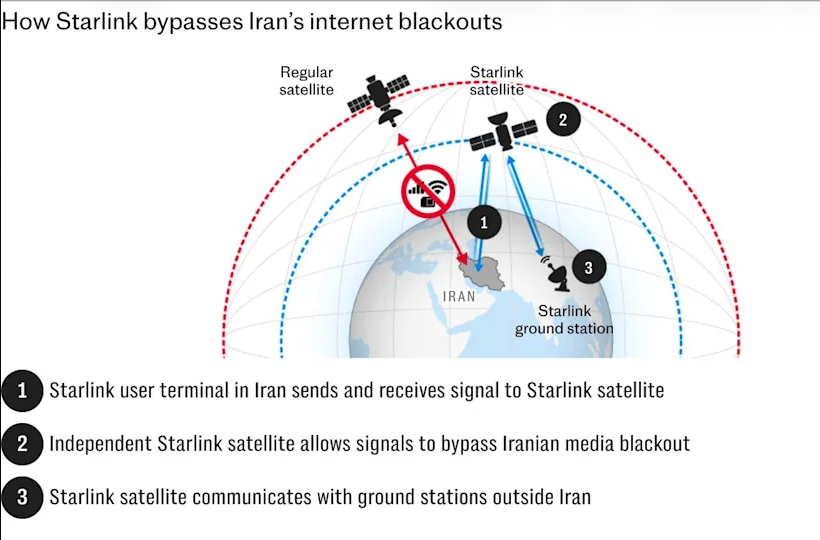
Iran shut down nationwide internet access during escalating protests, a tactic the government used before to fracture coordination and limit outside visibility. This time, activists turn to Starlink, an outlawed but already widespread technology inside the country. Thousands of dishes reportedly circulate through informal networks, smuggled in since U.S. authorities cleared limited access during earlier unrest.
According to the Iranian digital rights group NasNet, the Starlink service in Iran is operating without subscription fees, provided users already own the hardware. NasNet described the move as the result of weeks of coordination and technical back-and-forth. “We successfully provided access to Starlink for free to serve the revolution,” the group said in a public statement. Activists from Filterbaan and Holistic Resilience echo the claim, citing independent confirmations.
SpaceX itself stays publicly silent. Still, multiple sources familiar with Starlink operations confirm that internal approval is granted for free access during the blackout.
Beating the Jammer
Iranian authorities do not sit idle. Reports describe two aggressive countermeasures: GPS spoofing and radio-frequency interference aimed at Starlink uplinks. NasNet says recent Starlink software updates blunt some of these attacks, stabilising service even as interference continues. Satellite analyst Carlos Placido notes that Starlink’s dense orbital coverage gives users multiple fallback connections when one link degrades.
This technical duel turns satellite connectivity into a moving target. Each update becomes a tactical response. Each jammer forces another workaround.
A Political Signal Beyond Bandwidth
The decision to grant free access comes amid heightened rhetoric from Washington. President Donald Trump publicly urges Iranian protesters to continue demonstrating while hinting at behind-the-scenes discussions with SpaceX leadership. Starlink’s silence may reflect the delicate balance between humanitarian access and the risk of geopolitical escalation.
The move mirrors past Starlink deployments during disasters and political crises, including recent free service windows in Venezuela. In Iran, the stakes feel sharper. Connectivity does not just restore messaging apps. It restores witness.
Changing the Internet Shutdown Playbook

State-led internet blackouts once guaranteed isolation. Satellite networks weaken that control. Starlink’s presence shows that censorship resistance technology no longer sits at the edges of activism. It orbits overhead, resilient and hard to fully suppress.
Iran’s response underscores this shift. Jamming satellites marks an escalation beyond fibre cuts and ISP pressure. At the same time, the cat-and-mouse nature of space-based internet favours rapid iteration over brute force. Software updates now function as digital counter-protests.
For protesters, free access removes a financial barrier. For governments, it removes a reliable switch.
TF Summary: What’s Next
Starlink’s free access inside Iran reframes satellite internet as a geopolitical actor rather than a neutral utility. The service now operates as infrastructure for dissent, documentation, and coordination under extreme pressure.
MY FORECAST: Governments respond with sharper countermeasures and more aggressive hardware seizures, while satellite providers invest more quickly in anti-jamming resilience. Internet shutdowns lose effectiveness, not overnight, but permanently.
— Text-to-Speech (TTS) provided by gspeech