


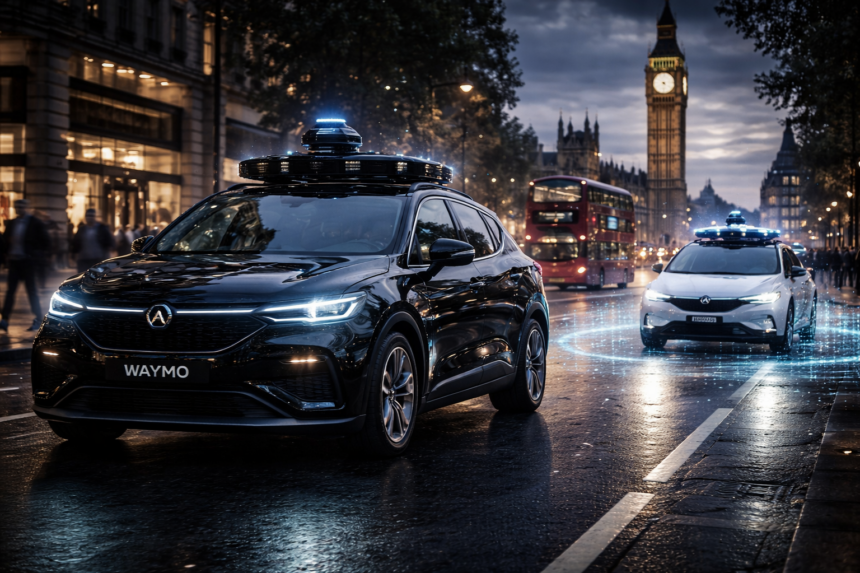
Autonomous Driving Is Going Through Its Paces
Autonomous driving promotes calm streets, fewer accidents, and smoother commutes. Reality still disagrees. A major power outage in San Francisco froze Waymo robotaxis in place. At the same time, the United Kingdom opened its roads to carefully supervised robotaxi testing. The two scenarios juxaposed ambition and infrastructure. They demonstrate how quickly confidence can wobble when systems meet the real world factors.
What’s Happening & Why This Matters
Waymo Freezes During San Francisco Blackout
A widespread power outage hit San Francisco, knocking out traffic signals across large parts of the metro area. Waymo robotaxis lost their primary reference points and stalled at intersections. The vehicles followed safety rules and treated each junction as a four-way stop. Yet scale broke the logic. Hundreds of cars waited longer than expected. Traffic backed up. Videos spread on social media about snarled conditions.
A Waymo spokesperson explained that the vehicles pause to confirm intersection status. Wireless disruptions also limited communication with remote human operators. City officials intervened and asked Waymo to suspend service. Tow trucks removed stranded vehicles overnight. Service resumed once power stabilized. No injuries occur, but the moment exposes how dependent autonomy remains on reliable infrastructure.
Confidence vs. Capability
Waymo leads the U.S. robotaxi market with hundreds of thousands of rides each week. The blackout shows a hard truth. Autonomous systems still rely on external signals, connectivity, and city utilities. When those fail, safety protocols slow everything down. That protects lives, but disrupts cities. The incident follows earlier scrutiny, including a software recall after vehicles fail to stop for school buses. Public trust takes time to build and seconds to lose.
The U.K.’s Cautious Progress
Across the Atlantic, the United Kingdom chose a slower path. Uber and Lyft are partnering with Baidu’s Apollo Go to begin robotaxi testing in London. Every vehicle includes a human safety driver. Regulators require oversight until at least spring 2026. Full commercial services wait until the Automated Vehicles Act activates in 2027.
Lyft CEO David Risher says the company works closely with Transport for London and local communities. The message stays clear. Innovation moves forward, but humans remain responsible. Waymo also starts supervised testing in London through its partner Moove. The U.K. treats autonomy as an experiment, not a finished product.
Two Paths, One Question
San Francisco shows what happens when autonomy meets chaos. London shows how regulation slows progress but limits shock. Both approaches shape the future of driverless transport. Cities must decide how much friction they accept today to gain efficiency tomorrow.
TF Summary: What’s Next
Driverless technology saw a reality check with the San Fran debacle. Power grids, connectivity, and urban planning now matter as much as software. Cities that invest in resilient infrastructure gain an advantage. Companies that admit limits build trust faster.
MY FORECAST: Robotaxis expand, but only inside tightly controlled zones for several years. Human oversight stays mandatory longer than companies expect. The winners balance patience, safety, and transparency.
— Text-to-Speech (TTS) provided by gspeech